

Which at-home beauty gadgets actually work in 2026? An honest comparison, and what to look for.
If you have a drawer of half-used beauty gadgets, you’re not alone. Most of us have bought into a promise at some point, the face roller, the mask, the device that was meant to change everything, and quietly put it away a few weeks later. It isn’t a lack of discipline. It’s that so many at-home beauty devices simply aren’t built to do what we hope they’ll do.
And the choice keeps growing. The global skin care devices market was estimated at US$23.6 billion in 2025 and is expected to reach US$26.1 billion in 2026. Zapping, pricking, whizzing beauty gadgets have all made their way out of the professionals’ safely gloved hands and into our bathroom cabinets. So which at-home beauty gadgets actually work in 2026, and which deserve your time, your money and your trust?
For a skin care device to have any real effect on the appearance or behaviour of skin, it must do one of two things:
1. Inflict physical or thermal attack on the skin, to trigger its injury-healing response and panic-make collagen
or
2. Transfer sufficient energy into skin cells to wake up their power centres

Beauty device comparison guide: how the main gadgets compare
Before we look at each technology, here’s the at-a-glance version.
| Device | How it works | How it feels | Downtime | How long results last |
|---|---|---|---|---|
| At-home microneedling | Tiny punctures trigger the skin’s repair response | Prickly, can be painful | Redness and sensitivity | Builds slowly with repeated sessions |
| At-home radiofrequency | Heats the skin to prompt a repair response | Warm | Minimal | Limited at home-safe energy levels |
| Microcurrent | Low electrical current tones facial muscles | Tingling | None | Temporary, needs constant upkeep |
| LED masks | Non-coherent light works mainly at the skin’s surface | Painless | None | Mostly surface-level |
| Cold laser (LLLT) | Coherent near-infrared light, no heat or wounding | Painless | None | Builds with consistent daily use |
Microneedling punctures skin into panic repair
Popular in-clinic treatments such as microneedling can achieve regenerative results, but only by causing intentional physical injury to the skin. Microneedling isn’t for those with a low pain threshold: it involves a lot of topical anaesthetic and a fair amount of blood.
Creating tiny micro-channels in the skin with an acupuncture-size needle forces it to channel all its efforts into healing itself. This stimulates collagen production, which can reduce the appearance of fine lines and give a smoother, more glowing texture. In the short term, though, microneedling routinely means wounding, swelling and a sensitive, prickling feeling.
At-home needling devices are duller and less penetrative than their in-salon sisters, but still work by causing micro-injuries to kick-start repair. They carry a risk of bruising and scarring, and because at-home needling equipment is hard to keep clean, there’s also a risk of infection. Some devices direct that each needle is used once and thrown away, which raises its own concerns about sustainability and safe disposal in homes with children.
Radiofrequency devices bring the heat
Not overly dissimilar in its approach, radiofrequency uses electromagnetic waves to heat the skin, inflicting intentional thermal damage so that the healing response is triggered and collagen is made in repair.
RF is a hugely popular in-clinic treatment, but the results of at-home radiofrequency devices are less impressive. Because of the risk of burns, at-home devices can only operate at low energy levels, so they often have little effect on skin rejuvenation. The argument against both microneedling and radiofrequency is that, in an age of advanced skin technology, both cause skin unnecessary trauma.
“Fundamentally the skin shouldn’t be damaged because it’s there to protect the body”
says LYMA founder, Lucy Goff.

At-home microcurrent devices offer a short-term sculpt
Using a very low-level electrical current and a conductive gel, at-home microcurrent devices work on the facial muscles to temporarily tone the face. Microcurrent is largely pain- and damage-free, but works only at the superficial layers of the skin.
The results can look instantly impressive, but because nothing has fundamentally changed in the skin’s structure, it isn’t long before the facial muscles relax again. That means efforts must be continually maintained, and many find the conductive gel messy and the treatment routine time-consuming. Some skin professionals argue you’d see a similar effect from a face oil and a good facial massage.
What at-home LED masks really do for skin
Dermatologists have long used professional LED light therapy, using red, blue and near-infrared LED wavelengths. Then at-home LED face masks went viral.
“The at-home beauty gadget market is saturated with countless devices that improve skin at surface level and deliver superficial results,”
explains LYMA founder Lucy Goff.
Inside the sculpted shells of LED masks are lattices of LED bulbs. Most use a combination of colours: blue light is used to target the bacteria that contribute to blemishes, while red light is used for its effect on the skin’s surface.
“You are going to get some response with LED because it’s light in the red spectrum, especially in the epidermis which is very thin, and LED light doesn’t need to be particularly penetrant to cover the epidermis,” explains craniofacial and plastic surgeon and LYMA Aesthetic Director, Dr Graeme E. Glass. Read the truth about at-home LED devices.
At-home face lasers are a question of power
Some popular at-home “laser devices” use non-ablative fractional technology, which works by heating the skin to induce an inflammatory response. By heating skin until it sends out heat shock signals, the skin goes into alarm mode and panic-produces collagen to protect and repair itself. Hot lasers, ablative, fractional or otherwise, work through controlled thermal injury, which is why they come with downtime and risk.
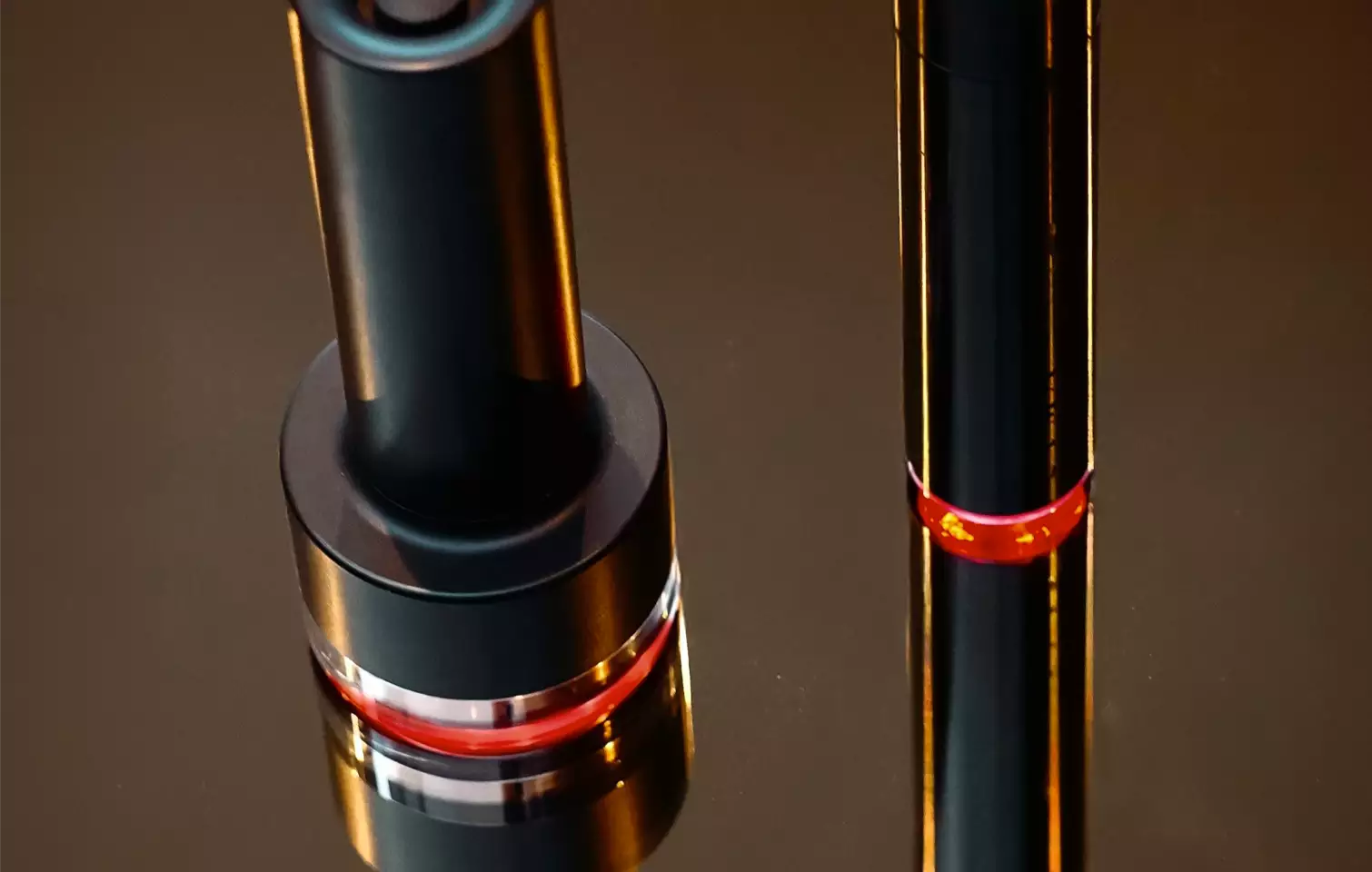
The other limitation of most at-home lasers is power: to stay safe for home use, they work at low output. The LYMA Laser was built differently, as a clinical-grade, 500 milliwatt near-infrared laser engineered to be completely cold.
“The reason it’s safe to use at home is that there are clever internal lenses inside that disperse the laser beam thousands of times, and because it’s been dispersed so many times, it removes all the heat from the laser,” explains LYMA founder Lucy Goff.
Cold lasers: power without the damage
The LYMA Laser PRO doesn’t heat or wound the skin. It’s completely cold to the touch, so there’s no pain and no downtime, just a few minutes of calm, daily ritual.
Designed to be used at home on the face and body, the LYMA Laser helps improve the appearance of skin, so it looks smoother, firmer and more radiant over time.

Proven laser technology. Reinvented.
Low-level laser therapy has been studied in medical research for decades. What’s new is having clinical-grade, coherent near-infrared light in a cordless device you can use calmly at home, in a few minutes a day. Read how photobiomodulation is changing the conversation about wrinkles.

Discover how the LYMA Laser technology works.
The best at-home anti-ageing devices for 2026: our verdict
Microneedling, microcurrent and radiofrequency are all well-established professional in-clinic treatments, but gaps appear when they’re shrunk into at-home gadgets. At-home fractional lasers have yet to show conclusive evidence that they carry enough power to make a profound difference.
If you want a device that works with your skin rather than against it, with no pain and no downtime, a cold laser is the one to consider. Choose the device you’ll actually love using, because the best beauty gadget is the one that leaves the drawer and becomes part of your day. Not sure which LYMA Laser is right for you? Compare the LYMA Laser and the LYMA Laser PRO, or read our guide to laser vs LED.
Frequently asked questions about at-home beauty gadgets
How do I know if a beauty gadget is right for me?
Start with your goal, then check the evidence. Look at how the device works, what it has been tested for, how long results last, whether it suits your skin and whether you’ll realistically use it as often as it needs.
What should I look for in an at-home laser skin device?
Check what it has been tested for, its power and wavelength, whether it relies on heat (which means downtime and risk) or works cold, the published evidence behind it, and the safety features built in.
What are the top features of the latest beauty devices?
The latest devices focus on painless, no-downtime treatment, cordless and app-connected designs, and technologies such as cold laser and LED that work without wounding the skin.
Is laser or LED better for skin?
LED uses non-coherent light that works mainly at the surface, while laser uses coherent light that reaches deeper layers of skin. Read our full guide to the difference between LED and laser.
Can I use the LYMA Laser on my face and body?
Yes. The LYMA Laser and LYMA Laser PRO can be used at home on the face and body to help improve the appearance of skin. Results vary from person to person.
About the author
Jessica Lacey is LYMA’s Beauty Editor, writing about skin science, beauty technology and the research behind healthy ageing.
You might also like
- What’s the difference between LED and laser light therapy?
- The truth about at-home light therapy devices
- How photobiomodulation is redefining wrinkles
*Individual results vary.


