

New EU rules are limiting retinol strength. Here's why a gentler approach can still work harder.
Retinol has earned its reputation as a gold-standard skincare ingredient, praised for decades by dermatologists for its role in supporting smoother, clearer, and more radiant skin. So it's no surprise that new EU legislation limiting over-the-counter retinol concentrations sparked questions, and a fair amount of concern, among skincare enthusiasts.
Under the regulation, which comes into effect on 1 November 2025, all non-prescription facial and neck products sold in the EU will be limited to a maximum of 0.3% retinol (or retinoids). A sell-through period allows existing products to remain on shelves until 1 May 2027, giving brands time to reformulate and adapt. Many already have.
While this change doesn't apply to the US and only indirectly affects the UK, which still mirrors EU cosmetics regulation post-Brexit, the global influence of European skincare, particularly from French pharmaceutical brands, means reformulated versions of cult-favourite retinol products will soon be widespread.
What is retinol, and why does its strength matter?

Retinol is a derivative of Vitamin A, and one of the most researched ingredients in skincare. It sits within Vitamin A's broader family of compounds, alongside other retinoid derivatives and provitamin carotenoids.
Used topically, retinol supports the skin's natural renewal process by encouraging the turnover of surface cells, which can help reveal a smoother, more even-looking complexion over time. It also plays a role in supporting skin structure and barrier function, which is why it's associated with softer-looking fine lines and a more refined texture. None of this makes retinol a treatment for wrinkles or pigmentation in the medical sense, but its supporting role in skin structure is well established in the literature.
What's changing isn't retinol's effectiveness, but the ceiling on how much of it a product can legally contain. That's a meaningful shift for a category that has spent years competing on percentage claims.
Why higher percentages were never the whole story
There's been a long-established competitive culture around retinol percentages, with the assumption that stronger automatically means better. The evidence doesn't support that. Even low retinol concentrations, in the region of 0.1%, have been shown to be effective for supporting cell turnover and skin health, without pushing skin's tolerance into the redness and irritation that comes with higher strengths.
The EU's move to cap concentration is, in part, a response to a separate concern: cumulative Vitamin A exposure across skincare, diet and medication. Skincare is a minor contributor on its own, but regulators are increasingly looking at total exposure rather than any single source in isolation.
LYMA Power Youth Skincare takes a gentler route
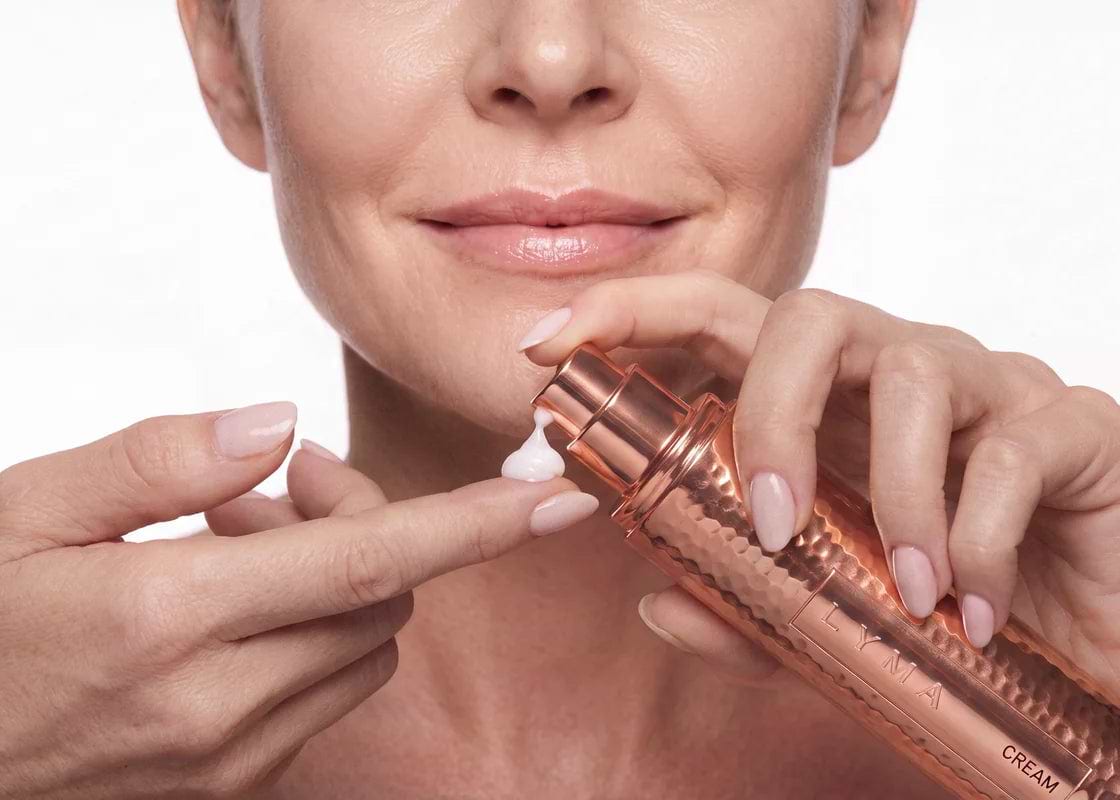
Rather than reformulating around a lower retinol ceiling, LYMA Power Youth Cream was built around one of the mildest forms of Vitamin A available: retinyl palmitate. It's one of eight actives in the Cream's patented Genolytic™ Technology complex (UK Patent GB2630756), a multi-active system designed to work across several mechanisms of visible skin ageing at once, rather than relying on a single high-strength ingredient.
Alongside it sits bakuchiol, a genuinely plant-based alternative to retinol with no structural relationship to it at all. Together, the two support skin renewal without the tolerance-building, redness or flaking that can come with a high-strength retinol - which is why the Cream's patch testing supports a sensitive-skin claim. The Serum is formulated differently and doesn't carry the same claim; it's dermatologically tested, but not positioned for sensitive skin specifically.
Because the Cream contains Vitamin A, a daily broad-spectrum SPF matters - both to protect skin, since Vitamin A can increase sun sensitivity, and because daylight degrades the ingredient itself. It's worth building into the morning routine as standard, not an optional extra.
None of this makes LYMA Power Youth Skincare a closed system. It's formulated to sit comfortably alongside a separate, stronger retinol product, for anyone who wants one. That's worth introducing gradually and carefully, ideally with guidance from a dermatologist or skin health professional who can advise on strength, frequency and how to build tolerance safely. LYMA Power Youth Skincare isn't designed to replace that conversation - it's designed to give skin a strong, comfortable baseline either way.
Where the LYMA Lasers fit in
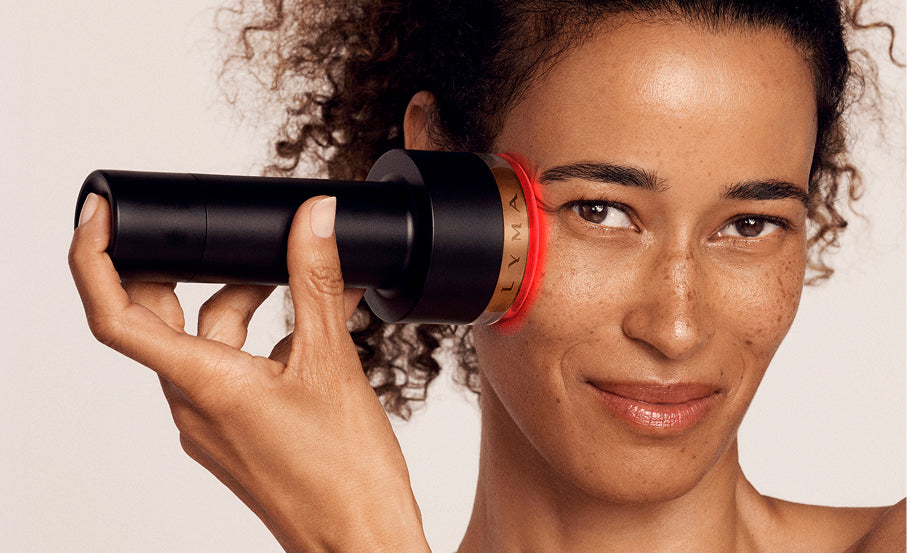
The LYMA Laser sits well alongside both approaches, and for a straightforward reason: it works through near-infrared low level laser light, not through an active ingredient absorbed into the skin. That means it isn't competing with a topical routine, retinol-based or otherwise, for the same job.
Used for just 15 minutes daily, the LYMA Laser has been shown to noticeably improve the appearance of skin texture, support skin elasticity and reduce the appearance of wrinkles and sagging skin. Layered alongside LYMA Power Youth Skincare, it works on skin from a different angle entirely, rather than duplicating what the Serum and Cream are already doing.
The same logic holds if someone is using a separate, stronger retinol product. "In terms of generic retinol, you can use the LYMA Laser whilst continuing your course, and in fact it should help mitigate the sensitivity and inflammatory effects of the retinol," says Dr Graeme Glass, plastic and craniofacial surgeon and LYMA Aesthetic Director. Retinol's main downside for many people is the irritation that builds with use. The Laser's anti-inflammatory profile makes it a natural companion to that routine, rather than an ingredient competing for the same space on the skin.
It's a question that comes up often enough that Dr Glass addresses it directly in our full Laser and Skincare FAQ, alongside the practical how-to questions people ask most.
The bigger picture
The new EU regulation isn't a setback for retinol users, or a problem LYMA needed to solve. It's a prompt to think more carefully about what's actually in a routine, and why. For anyone who wants the visible benefits historically associated with retinol, without the commitment of building tolerance to a high-strength formula, a gentler approach built on retinyl palmitate and bakuchiol is a genuine option, not a compromise. For anyone who already uses a stronger retinol and wants to keep it, LYMA Power Youth Skincare and the Laser are built to work alongside it rather than against it.
To understand the full thinking behind how the Skincare was engineered, read how LYMA Power Youth Skincare was formulated, or hear it directly from the surgeon behind it in Dr Graeme Glass's own account of inventing LYMA Power Youth Skincare.
Explore LYMA Power Youth Skincare
Shop LYMA Power Youth Skincare or Shop LYMA Laser
* This product is not intended to diagnose, treat, cure or prevent any disease.


