

The best facelifts are undetectable. Why skin texture and scars are the real giveaway.
Have you seen her recently? She looks phenomenal. What has she had done? These are the conversations we’re having about other people right now. Why? Because in the past year, the facelift results being achieved by leading plastic surgeons have gone stratospheric, prompting all of us to rethink our attitudes and our finances, dramatically. When you can look like a thirty-something well into your sixties, it’s becoming increasingly difficult to age anyone in the room. And what separates the undetectable from the obvious often isn’t the lift at all. It’s skin texture.
Why skin texture is the real giveaway
Acclaimed dermatologist Dr. Dendy Engelman, MD, FACMS, FAAD says we have finally entered the era of ‘the traceless facelift’.
“The subtlety of a facelift is exactly where we want to land and a good facelift is undetectable. There’s a definite improvement in appearance but it can’t be obvious. Rather than being drastic, results should fly under the radar. You should simply look like a better version of yourself.”
“The best outcomes still allow for natural expressions, scars need to be artfully well placed and imperatively, you need to address skin quality in addition to sagging.”
A lift repositions; it doesn’t change how the skin itself looks. Uneven texture, dark spots and fine lines can still give the game away, which is why the experts now talk about skin quality as much as structure.
The facelift everyone in Hollywood is having
“There is a major trend of deep plane facelifts which when done well, and in the hands of an expertly trained, practised provider, can look amazing,” says Dr. Dendy.
“Deep plane facelifts can produce excellent results but they’re a riskier procedure and the downside of social media is that we only see the best results of before and after facelifts. In my office, I often see the undesired outcomes that people weren’t expecting like nerve damage, infection, haematoma and asymmetry.”
As the name infers, deep plane facelifts entail surgical work on the deeper muscles and ligaments of the face, and recovery times sit at the highest end of the scale. In a bid to bring some much-needed transparency to the celebrity plastic surgery space, Marc Jacobs documented his deep plane facelift on social media and Kris Jenner revealed the name of the surgeon behind her SMAS facelift. Deep plane vs SMAS is the hottest facelift topic right now.
“I don’t think it’s the depth that dictates a great facelift,” says Dr. Dendy.
“You don’t have to go to that plane to improve most patients. In a traditional facelift you tighten the SMAS, the superficial muscular aponeurotic system - the connective tissue that covers the muscles of facial expressions and connects to the skin. If you tighten that, you can yield beautiful results.”
According to the American Society of Plastic Surgeons, 59% of US facelift patients in 2023 were aged 55–69, but there’s also been a huge uptake in facelifts worldwide with people going under the knife much younger. As a board-certified dermatologist, Dr. Dendy treats her patients in a myriad of preventative ways to delay and even avoid facelifts.
“When people come to me in their sixties and seventies who have never done anything, they have almost guaranteed themselves needing surgery. It’s so much better to not have the problem, than having to reverse it. I think it’s great to start young with at-home and in-office procedures; fine little tweaks with skin quality, small doses of filler for volume loss and neuromodulators to address the signs of ageing as you see them. If you do that in your younger years, you can stave off the signs of ageing and put off surgery for decades, or indefinitely.”
The jawline has become the symbol of youth
“In my practice, I certainly see a huge trend of people addressing the lower face. Over time we have come to address the upper half with neuromodulators for crow’s feet and frown lines, forehead lines and mid-face volume loss, and now there is a complete mismatch with the lower face and neck. Now people are seeing sagging, jowling, neck lines and loss of definition in the lower jaw. Certainly a defined jawline is an indication of beauty, especially in men, and both in-office and at-home, we are focussing on the lower face now in order to achieve the most youthful appearance.”

No such thing as a scarless surgery
“The problem with facelifts isn’t the lift, it’s the scar,” says Graeme Glass, PhD, Craniofacial and Plastic Surgeon.
“The best surgical techniques will minimise scarring but anytime you undergo surgical facelift there will be scarring, bruising and swelling,” warns Dr. Dendy.
“Scars are the big telltale signs of a facelift, and the last thing you want is the giveaway signs of surgery when you’re trying to look your best.”
Skin texture, scars and the at-home laser
Dr. Dendy’s advice is to look after skin quality early, with small, regular tweaks at home and in-office. That’s where at-home laser technology has its place.
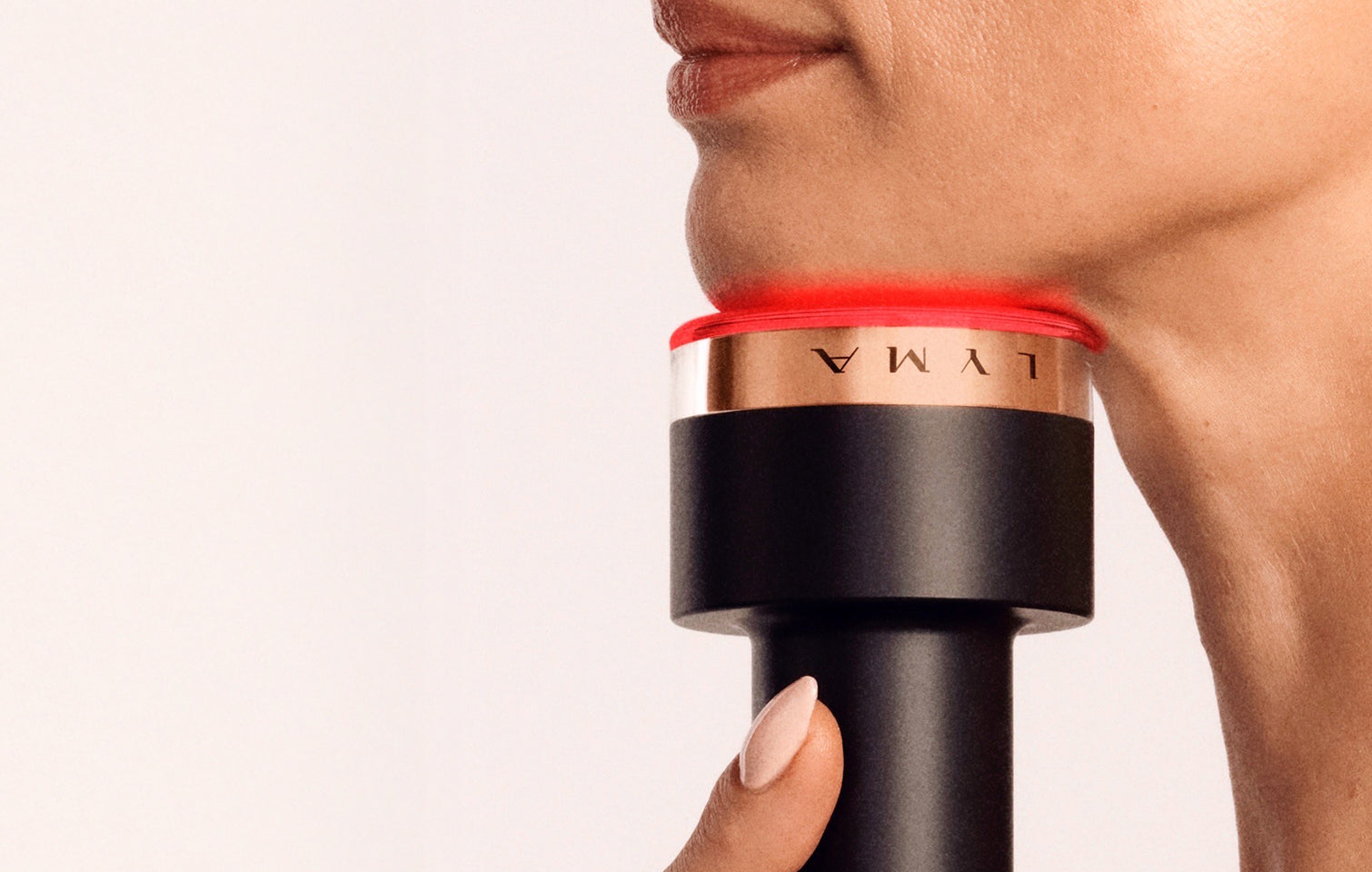
Powered by 500mW of near-infrared laser light, the LYMA Laser is designed to transform the look of your skin, so skin texture looks smoother and more even, and dark spots look less visible over time. It’s also designed to improve the appearance of scars on the face and body.
See those results: the skin texture on the knee looked visibly transformed after 30 days of using the LYMA Laser PRO. *Individual results vary.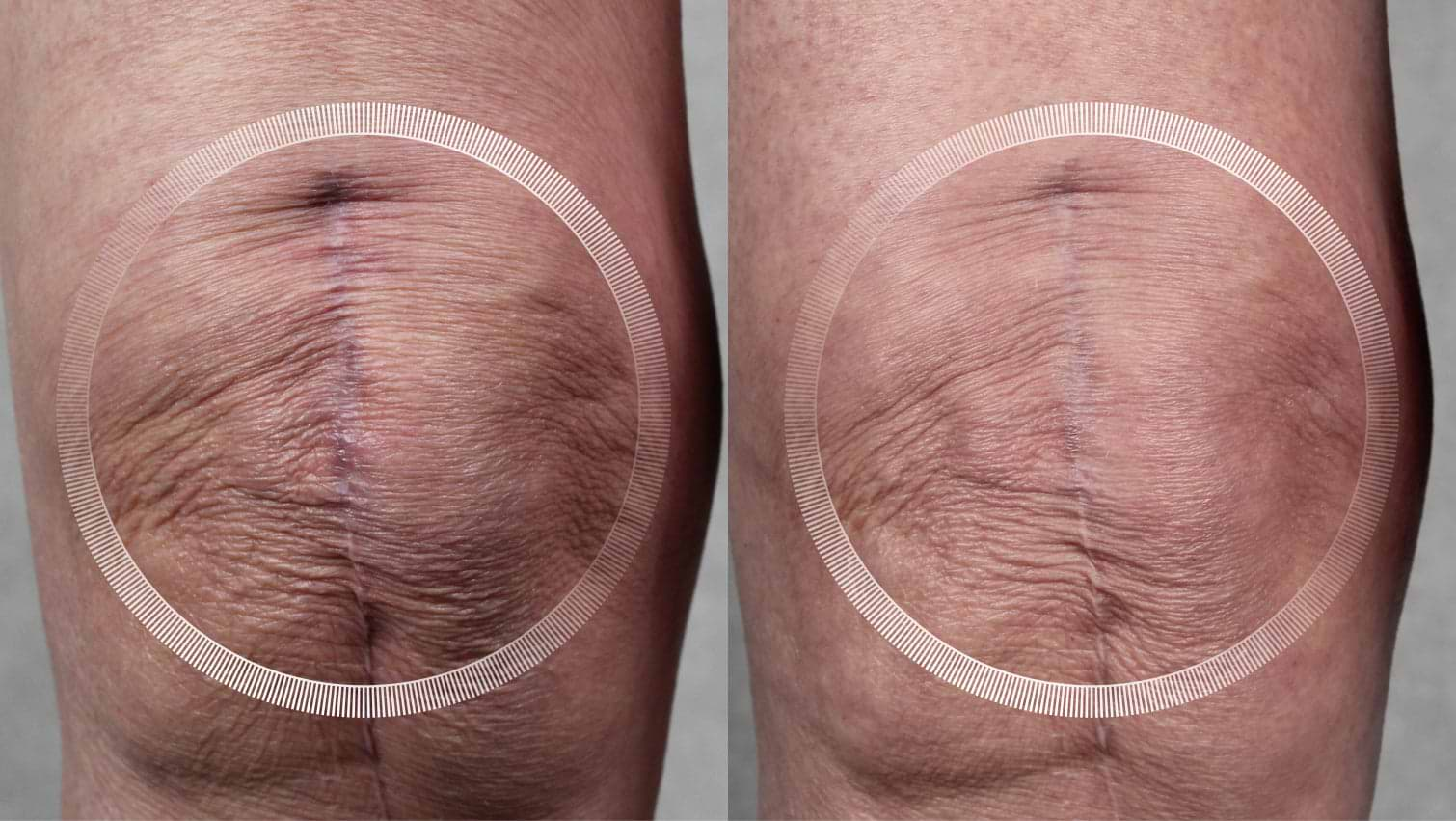
“I have seen amazing results with the clients who use the LYMA Laser,” says Dr. Dendy.
It’s part of a wider shift from fixing to maintaining, and towards skin longevity: looking after the skin you have so the work, if you ever choose to have it, is the part nobody notices.
Discover how the LYMA Laser and the professional-strength LYMA Laser PRO fit into your skin texture routine.


