

Biohacking for women has outgrown cold plunges and cycle syncing.
Search the term ‘biohacking for women’ and you’ll find the same advice everywhere: sync your workouts to your menstrual cycle, drop your cold plunge to 12-18°C instead of the colder temperatures men use, time your carbs around ovulation.
It’s good advice, and it’s overdue - only 39% of sports science studies include women, so most fitness and nutrition guidance was built for men first, then scaled down for women rather than designed for them from scratch.
But what is biohacking for women, really, in 2026? The answer is that it is bigger than any of those tips. The real shift isn’t in the advice itself - it’s in everything happening around it.
Diagnosis leaves the clinic
The clearest shift is in how women are finding out what is happening inside their bodies. Most existing advice still assumes a single test: a blood panel, a hormone check, a result acted on until the next appointment. That model is already being replaced by something continuous.
Clair, launching from Stanford University in November 2026, combines ten biosensors with AI to estimate oestrogen, progesterone and the hormones that govern ovulation in real time from a wrist-worn device - built around what its founders call ‘life-stage intelligence’ tracking. This means tracking and examining a woman’s hormonal profile as it actually behaves across her cycle and into perimenopause and menopause, rather than a single annual blood draw.
Tally Health turns a quarterly cheek swab into a running measure of biological age. Neko Health applies the same logic to full-body screening, tracking more than 50 health markers in a single 15-minute scan. None of this is ‘get tested, then follow a protocol’. Diagnosis becomes part of a woman’s everyday life and is continuous.
The body as a system, not a symptom

The science underneath this shift is reframing organs that were previously read in isolation. The ovary, for most of medical history, has been understood through a single lens: fertility. That framing is giving way to something larger. Research increasingly positions the ovary as an endocrine organ in its own right - ageing faster than the rest of the body and shaping cardiovascular, metabolic and bone health well beyond reproduction.
In 2026, XPRIZE launched a $50 million global challenge treating ovarian health as a vital sign for whole-body longevity. Skin is undergoing a parallel reframe: new research linking skin biomarkers to neurodegenerative disease - the ‘skin-brain axis’ - is turning appearance into a legible signal of what is happening throughout the entire body, and raising the bar for what counts as treatments that work on skin structure, not just how they look.
“Medicine still trains people to stick in their lanes. There are neurologists, and GI docs, and OB-GYNs. But the whole field of hormones, metabolism, neurotransmitters, how they affect the entire system - it’s something to be understood together.” Dr Florence Comite
That is a genuinely different proposition to cycle-syncing a workout: it asks what a single organ can tell you about the rest of your body, decades before symptoms would otherwise surface.
The standard nobody set
None of this progress solves the problem that pushed women toward extreme, one-size-fits-all biohacking in the first place: too many claims, not enough proof.
More than half of women say they struggle to distinguish products with real science behind them from those that simply borrow scientific language - and the biohacking market, now crowded with supplements, diagnostics, wearables, clinics and influencers, has matured faster than most women’s ability to evaluate it.
“Women already know the foundations of good health. The real opportunity is helping them turn that knowledge into actions they can sustain, in doing the due diligence in a crowded market.” Dr Stephanie Kuku
That is precisely the gap LYMA’s P.O.W.E.R. Index was built to close: not another protocol to follow, but a way of asking, before any purchase or practice, whether it is actually proven, whether the outcome it promises is the one it was tested for, whether it understands the body as one connected system, whether it leaves a woman better equipped to decide for herself, and whether the value compounds over time.
This same standard applies to biohacking trends too, not just products. Take cold plunging: the 12-18°C figure we mentioned earlier is better than generic, male-based advice, but it’s still an early estimate, not proven science. As Dr Elissa Epel says, research on how these practices actually affect women “is new in its thinking.” A good biohack, in other words, is one that can survive being questioned - not just one that sounds precise.=
Care becomes infrastructure
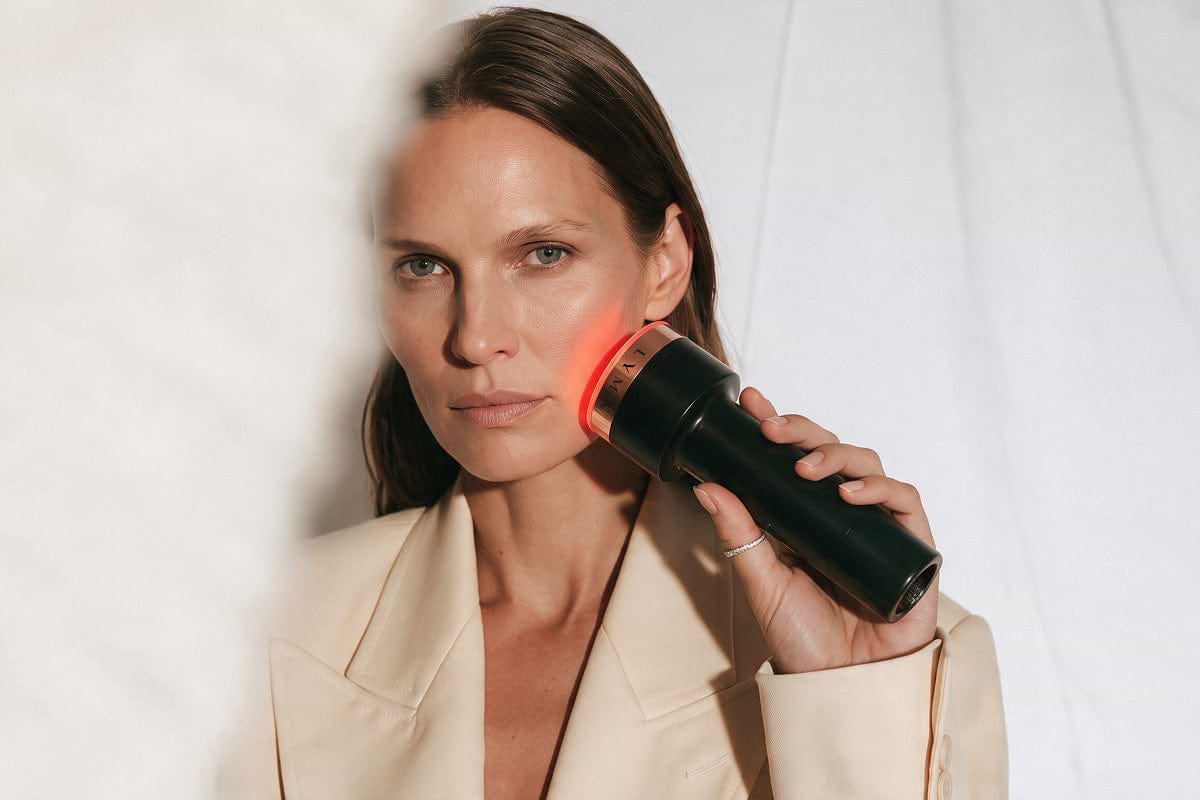
The most significant shift may be the least visible: biohacking is moving out of the individual’s hands entirely and into the systems around her. Concierge medicine, physicians like Dr Sally Greenwald combining hormone optimisation, menopause medicine and sexual health with continuous, relationship-based care, exists because no single appointment currently carries a woman’s full picture forward; new research traces most delayed perimenopause diagnoses to that same failure of continuity.
At the same time, the spaces women live and work in are being built for biohacking outcomes directly: home saunas, affusion showers built into apartment bathrooms, recovery rooms combining light therapy, vibroacoustics and breathwork in one session - the physical infrastructure behind a stress-proofed morning routine. Dr Epel calls the mechanism behind much of this ‘hormetic stress’ - short, controlled, titratable stressors the body can recover from and adapt to.
Dr Epel says lifestyle changes beat medication for slowing ageing, because their benefits build up over a lifetime rather than working just once. None of this requires a woman to test herself or start a new supplement. It requires her environment, and the care she gets, to finally catch up with what she already knows.
There is a psychological logic here too. Research from New York University links anxiety about ageing to measurably faster cellular ageing - worry does not stay confined to the mind. Taking action against it - researching, testing, adjusting - appears more physiologically sound than sitting with the worry alone, which may explain why biohacking has taken hold among women so quickly.
It is also worth noting who is driving the research, and the three experts behind it have each shaped a different part of that answer.
“Twenty years ago, scientific discovery largely belonged to universities and pharmaceutical companies. Today, some of the most ambitious research into ageing, skin biology and prevention is being driven by consumer health and beauty companies themselves.”
Dr Stephanie Kuku
That is exactly why the standard applied to their claims matters as much as the science itself.
The real story
That is the real story of the female biohacker in 2026: not a woman doing more to her body, but an entire category rebuilding itself - diagnostically, scientifically, structurally - around the fact that she has been paying closer attention than the market ever gave her credit for. The cold plunge and the cycle-synced workout are not wrong. They are simply no longer the interesting part of the story.
Choose the biohack that can survive being questioned
Put the standard to the test on the biohack that actually holds up. Discover the LYMA Supplement and LYMA ID2 today.


