

LED, laser, infrared: not all red light devices are equal. Here's what actually separates them.
The market for at-home beauty technology is growing at a pace that outstrips most people's ability to evaluate it. Devices arrive with convincing claims, clinical-sounding language and wavelength numbers, and the consumer is left to navigate the difference between red light therapy, red light laser therapy, LED therapy, infrared therapy and cold laser therapy, often without a clear map.
The confusion is understandable. Many of these terms overlap. Some refer to the same wavelength range. Others are used interchangeably in marketing even when the underlying technologies are fundamentally different. And that difference, the light source, the coherence, the penetration depth, is precisely what separates a device that produces a temporary surface glow from one that changes the skin at depth.
This article addresses the most searched questions in this space head-on: Is red light therapy the same as laser therapy? What is the difference between red light and infrared? Is all red light therapy the same? And where does LED fit into all of this?
What is red light therapy for the face?
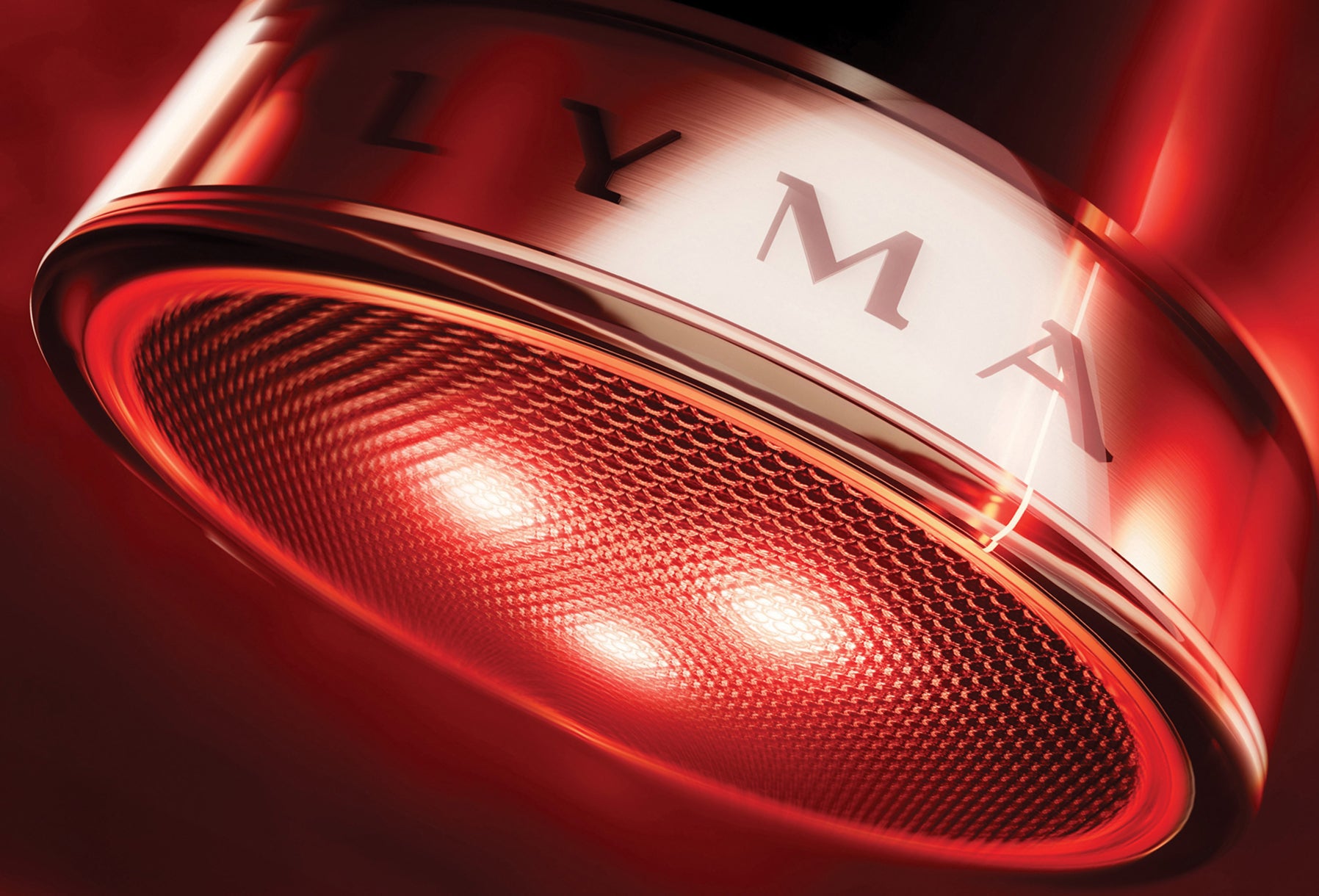
Red light therapy for the face is a non-invasive treatment that uses specific wavelengths of light to interact with the skin. In most consumer contexts, it refers to LED-based devices, panels, masks and wands, that emit visible red light, typically in the 620–750nm range. These wavelengths interact with the outermost layers of the skin and can temporarily improve surface texture, tone and the appearance of the complexion.
At the more advanced end, red light therapy overlaps with photobiomodulation: the process by which specific light wavelengths are absorbed by cells and converted into chemical energy, driving biological responses within the tissue. This is the territory of low-level laser therapy (LLLT), which operates not at the skin's surface but in the deeper layers where visible skin improvement is possible.
The important distinction: red light therapy for the face can refer to a consumer LED mask or a near-infrared laser device. These are not the same thing, and the results they produce are not comparable.
Red light vs infrared light: what's the difference?
Red light and infrared light both sit within the electromagnetic spectrum, but they are not the same and should not be used interchangeably.
Visible red light operates between approximately 620nm and 750nm, wavelengths the human eye detects as red. Infrared light begins where the visible spectrum ends. "Infra" means beyond, so infrared is light that falls just outside the range of human vision, at longer wavelengths with greater penetrative capacity.
The longer the wavelength, the deeper the penetration into tissue. Near-infrared light, operating from around 750nm to 1400nm, penetrates far deeper than visible red light, reaching the dermis and the structures beneath rather than stopping at the epidermis.
Is infrared the same as red light therapy?
No. While both are often grouped under the "red light therapy" umbrella, they behave differently in tissue and produce different outcomes. Red light affects the skin's surface. Near-infrared light penetrates deeper, which is why near-infrared laser therapy can address the skin at greater depth, not just on the surface.
Many consumer devices market themselves as combining red and infrared wavelengths, but the clinical relevance of that infrared component depends entirely on the light source. Near-infrared LED light is still LED: it remains scattered and loses power before reaching the dermis. Near-infrared laser light is coherent and maintains its energy all the way through.
Red light (620–750nm): Visible, shorter wavelength, penetrates epidermis only.
Near-infrared (750nm+): Invisible, longer wavelength, penetrates deep into the dermis.
Near-infrared laser (808nm): Coherent, polarised, maintains power at depth. The LYMA Laser PRO.
Is all red light therapy the same?
No, and this is the question that matters most when evaluating any device in this category.
Red light therapy is a broad term that covers technologies at very different ends of the spectrum. A £40 LED mask and a near-infrared cold laser device both qualify as "red light therapy" in the loosest sense: they both operate in overlapping wavelength ranges. But their light sources, penetration depths, mechanisms and achievable results are fundamentally different.
LED red light therapy
The most widely available form. LED devices emit scattered, omnidirectional light across a broad cone. This light disperses rapidly, which limits how deeply it can penetrate tissue. It reaches the epidermis, the skin's outermost layer, and can produce a temporary improvement in surface appearance: a glow, a reduction in surface redness, a marginal improvement in texture.
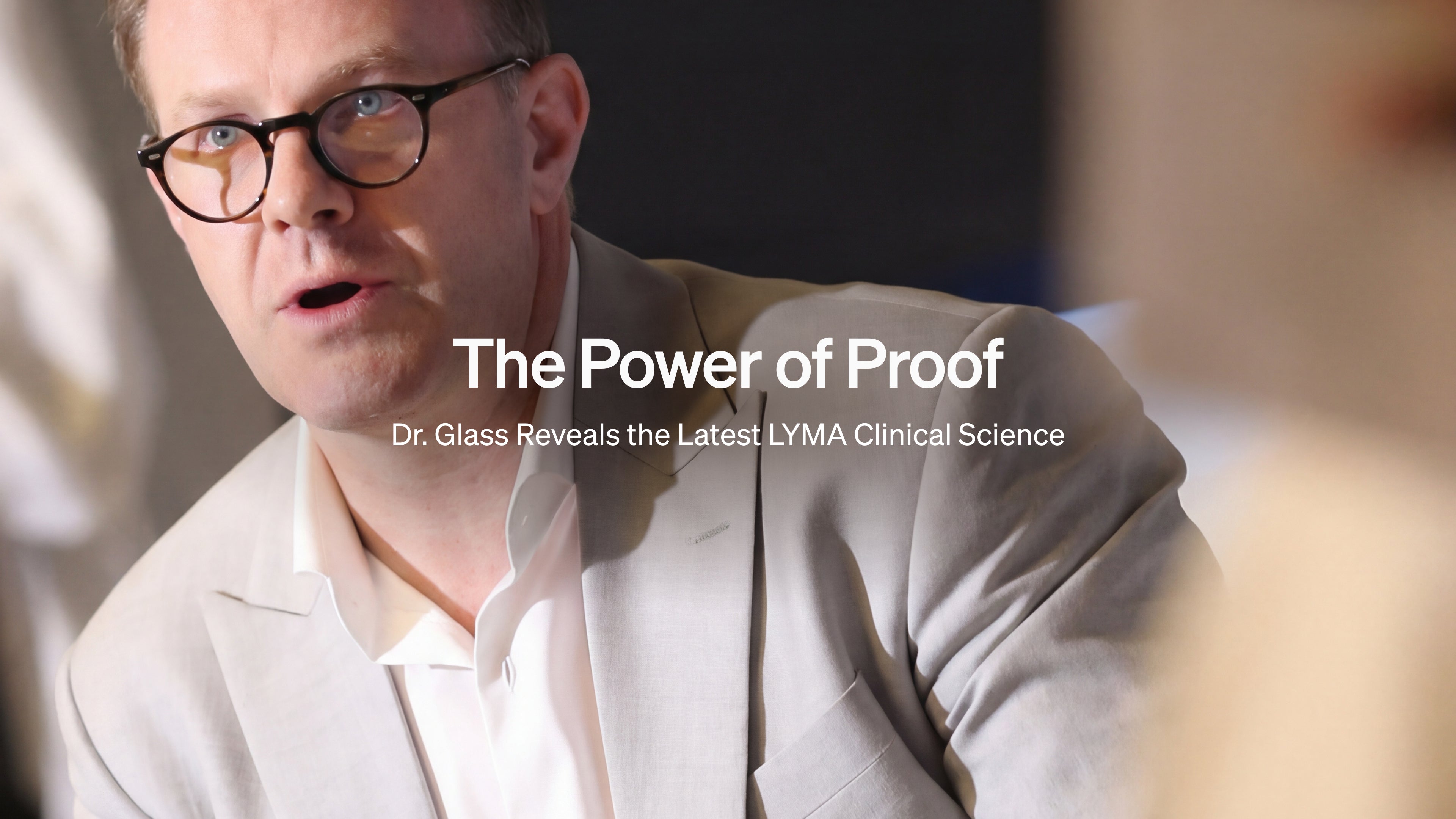
As Dr Graeme Glass, Plastic and Craniofacial Surgeon and LYMA Aesthetic Director, explains:
"You are going to get some response with LED because it's light in the red spectrum, especially in the epidermis which is very thin, and LED light doesn't need to be particularly penetrant to cover the epidermis."
That epidermis-level effect is where the results stop.
Near-infrared LED therapy
Some devices combine visible red wavelengths with near-infrared LEDs, claiming deeper penetration. The near-infrared wavelength is longer, which does theoretically allow for slightly greater tissue depth, but the fundamental problem remains the light source itself. LED light is non-coherent, meaning the photons travel in multiple directions and lose power quickly. By the time near-infrared LED light has passed through the epidermis, its energy has dissipated too significantly to drive the kind of response achievable with laser light.
Near-infrared laser therapy (LLLT)
This is where the category changes entirely. Near-infrared laser light is coherent, monochromatic and polarised: all photons travel in the same direction, at the same wavelength, in phase with each other. This coherence allows laser light to maintain its power as it passes through skin and reach the dermis, where visible skin improvements occur. At the right wavelength (808nm), it also generates additional energy within tissue through a phenomenon called laser speckle, amplifying its effect at depth.
So: are all red light therapy devices the same? No. The difference between LED red light therapy and near-infrared laser therapy is not a difference of degree. It is a difference of mechanism, penetration and achievable outcome. You can read more about the science behind LYMA laser technology.
Red light therapy vs laser therapy: the core differences
The most important comparison for anyone evaluating at-home skincare devices: red light therapy (LED) versus laser therapy (LLLT). They are often discussed as if interchangeable. They are not.
| Red light therapy / LED | Near-infrared laser (LLLT) | |
|---|---|---|
| Light source | LED, scattered, omnidirectional | Coherent, polarised laser |
| Wavelength | 620–750nm (visible red) | 808nm (near-infrared, invisible) |
| Penetration | Epidermis (1–2mm) | Deep dermis (3–5mm+) |
| Is it infrared? | No, visible red light | Yes, near-infrared spectrum |
| Laser? | No | Yes, cold laser technology |
| Cold laser? | No | Yes, zero tissue damage |
| Result on skin | Surface glow, temporary | Visible improvement at depth |
| At-home option? | Yes, widely available | Yes, LYMA Laser only |
The distinction matters because it's the dermis that ages. Wrinkles, laxity, pigmentation, loss of skin density: these changes occur in the dermis. If a device cannot reliably reach the dermis, it cannot address the appearance of those changes over time. It can improve how the surface of the skin looks briefly. It cannot improve the appearance of the skin at depth.
Cold laser therapy vs red light therapy: are they the same?
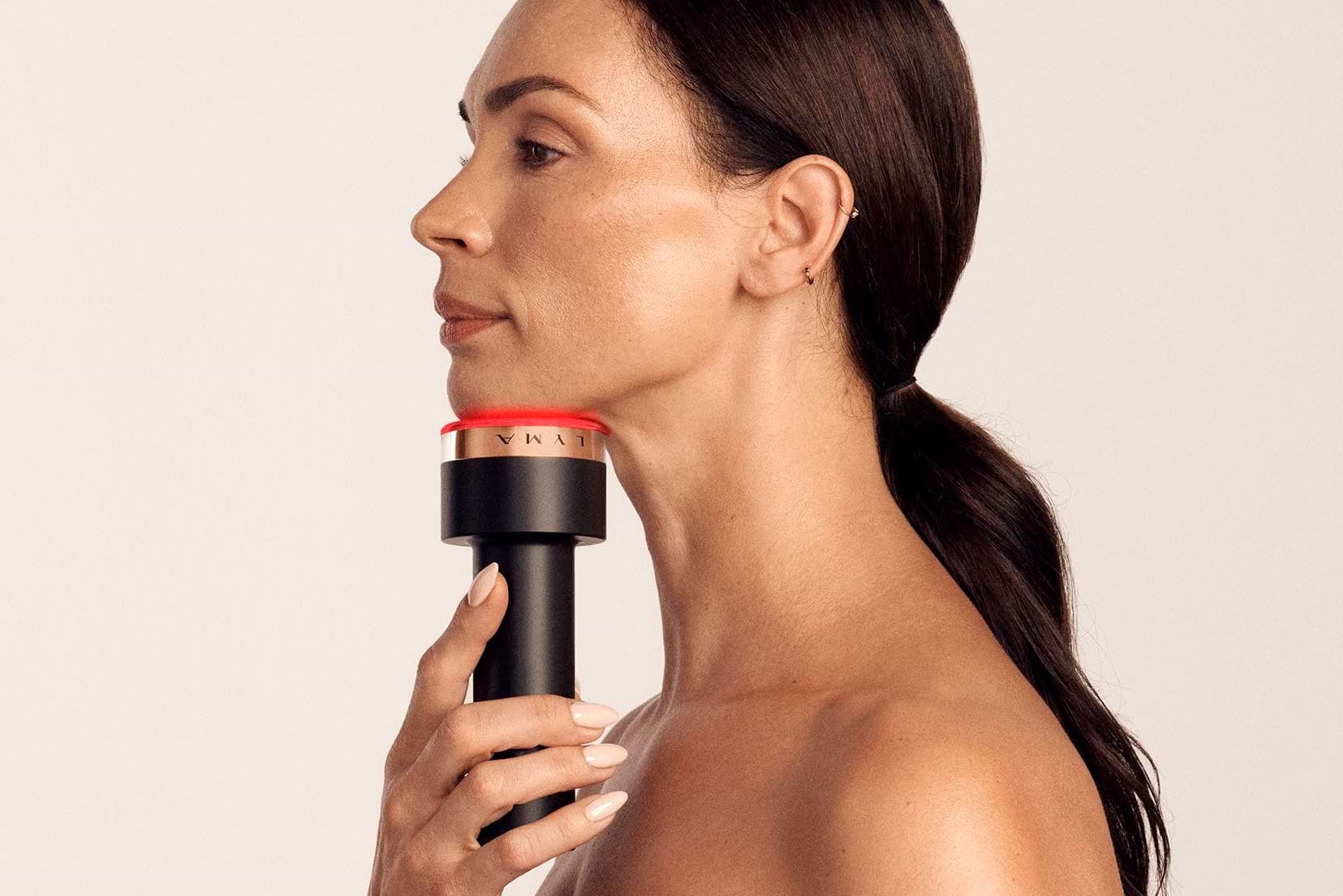
Cold laser therapy is another name for low-level laser therapy (LLLT). The "cold" refers to the fact that the laser operates at a power level that produces no heat in the tissue: it stimulates without damaging.
This stands in contrast to ablative and high-level laser treatments used in clinics, such as CO₂ lasers, which work by deliberately burning controlled cores of skin to trigger an inflammatory repair response. Cold laser therapy produces no such destruction and requires no recovery time.
Cold laser vs red light therapy: they are not the same. A cold laser uses coherent, penetrative laser light to drive photobiomodulation at depth in the tissue. Red light therapy, in its typical consumer form, uses LED light that does not share these properties.
The LYMA Laser PRO is FDA cleared, operates at 808nm, produces no heat in the tissue, and can be used daily at home with no downtime and no restrictions.
What do LED face masks do for skin?
LED face masks emit visible red light, and sometimes near-infrared, across the skin's surface. They are widely available, generally safe, and can produce a visible short-term improvement in the skin's appearance, particularly at the surface level.
The limitation is architectural. LED light is scattered. It disperses in all directions, bouncing off every surface it meets. Some of it reaches the epidermis. Very little reaches the dermis. By the time any meaningful proportion of LED light has passed through the epidermis, it has lost too much energy to trigger the kind of response needed to improve the appearance of wrinkles, laxity or skin density.
"So whilst an LED-based light mask can give you the appearance of a superficial glow, it can't actually make the structural differences to your skin."
This is not a criticism of LED therapy as a category: it simply reflects the physical constraints of the light source. For temporary improvements to surface tone and texture, LED devices are a reasonable option. For visible skin improvement at depth, the technology is insufficient.
Low-level laser therapy vs red light therapy: why the distinction matters
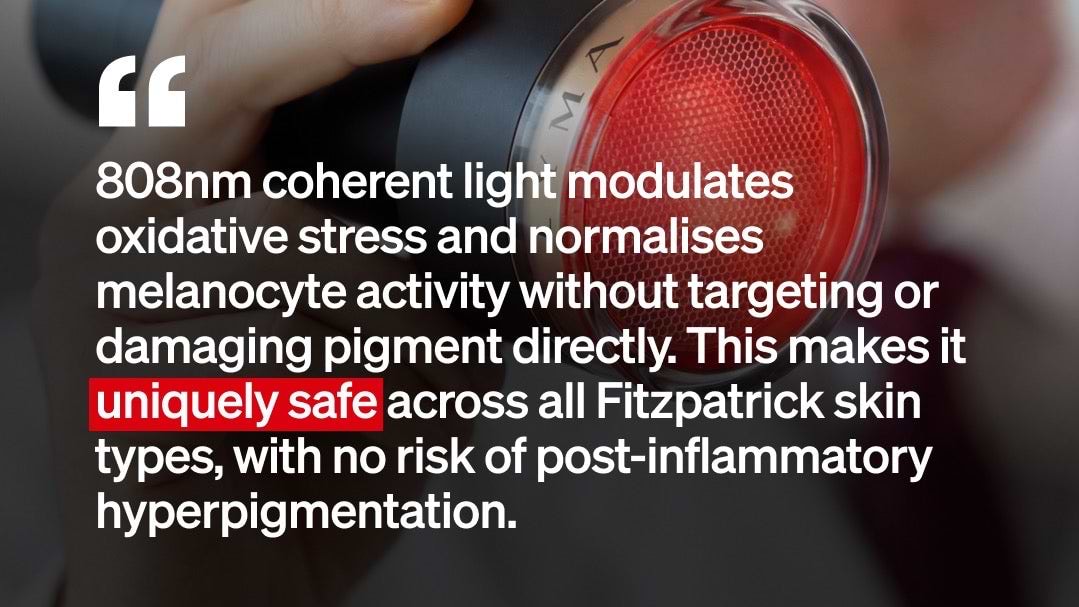
The reason this comparison matters is that the two technologies are frequently conflated, in marketing, in media, and even in some scientific literature. Both operate in the red and near-infrared range. Both are non-invasive. Both are classified as "non-thermal" in the sense that they don't produce the destructive heat of ablative lasers.
But the mechanism of action is different, the depth of effect is different, and the evidence base is different.
Clinical research on low-level laser therapy, including the studies supporting the LYMA Laser's technology published in the Aesthetic Surgery Journal, used laser light, not LEDs. The photobiomodulation effects demonstrated in that research, including the appearance improvements observed at the dermal level, are specific to laser light at the correct wavelength. They are not replicated by LED devices at equivalent power outputs.
When evaluating any device described as "red light therapy", the practical questions are: is the light source a laser or an LED? What wavelength? What does the evidence actually show? Explore the full LYMA Journal for more on the science of skin and light.
Is the LYMA Laser red light therapy?
No. The LYMA Laser is a near-infrared cold laser device, not red light therapy in the conventional LED sense.
It operates at 808nm, in the near-infrared spectrum, using coherent, polarised, monochromatic laser light. Unlike LED-based red light therapy, which is limited to the epidermis, the LYMA Laser penetrates into the dermis, where it drives photobiomodulation: the conversion of laser light into cellular chemical energy that triggers biological activity at depth, visibly improving the appearance of skin over time.
It is the only at-home device to achieve this with published clinical evidence. Five peer-reviewed studies in the Aesthetic Surgery Journal support the technology. And because it uses cold laser technology, zero tissue damage, no heat, it can be used daily at home, with no downtime and no restrictions on daily life.
"Near-infrared laser light is like a pin-point, piercing through dense surfaces without losing power. Hence why the near-infrared laser in the LYMA Laser is capable of such incredible regenerative photobiomodulation."
The LYMA Laser is not red light therapy. It is low-level laser therapy. The distinction is not semantic: it is the difference between a device that reaches the surface and one that reaches the cause.
Has red light therapy been recognised outside the beauty industry?
Red light therapy's credibility isn't limited to skincare marketing. New Scientist has reported on the growing evidence behind red and near-infrared light, and featured the LYMA Laser PRO specifically in its coverage of this space.
The distinction New Scientist draws lines up with the science behind LYMA laser technology: it's coherence and wavelength that determine how deep light can travel, not the marketing language on the box.
Board-certified dermatologist Dr Dendy Engelman has spoken about why light source matters when it comes to visible results:
"Coherent laser light holds its power as it travels through skin, unlike LED light, which scatters and loses energy before it can have any meaningful effect below the surface."
That principle is what underpins photobiomodulation itself, and it's the same reason LED and laser light therapy produce such different results, despite both sitting under the "red light therapy" umbrella.
This kind of external recognition reinforces the core distinction this article makes: not all red light therapy is equal, and the difference lies in whether the light source can maintain power deep enough to change how the skin looks, not just how it feels in the moment.
Your questions on red light therapy
Is red light therapy the same as laser therapy?
Not if one uses LED and the other uses laser. Red light therapy most commonly refers to LED-based devices that emit visible red wavelengths and affect the skin's surface. Laser therapy, specifically low-level laser therapy (LLLT), uses coherent laser light that penetrates far deeper and triggers photobiomodulation at the cellular level. They operate in overlapping wavelength ranges but are different technologies with different results.
Is infrared the same as red light therapy?
No. Red light is visible and sits between 620–750nm. Infrared light begins beyond the visible spectrum and penetrates deeper into tissue. Near-infrared laser therapy, at 808nm, reaches the dermis, where the processes of skin ageing become visible. Near-infrared LED therapy is still LED-based and subject to the same penetration limits as other LED devices.
Are all red light therapy devices the same?
No. The category covers everything from basic consumer LED panels to clinical-grade near-infrared laser devices. The light source (LED vs laser), wavelength, coherence and power output all determine how deeply the device affects the skin and what results are possible. An LED face mask and the LYMA Laser both fall within the broad "red light therapy" category, but are not equivalent technologies.
What is the difference between cold laser therapy and red light therapy?
Cold laser therapy is low-level laser therapy delivered without heat. It uses coherent laser light to improve the appearance of the skin at depth without causing damage. Red light therapy in the consumer sense uses LED light, which is non-coherent and limited to the skin's surface. Cold laser therapy reaches far deeper than LED red light therapy.
Is the LYMA Laser the same as red light therapy?
No. The LYMA Laser is a near-infrared cold laser device operating at 808nm. It uses coherent laser light, not LED, to penetrate deep into the dermis and drive photobiomodulation at depth. It is low-level laser therapy (LLLT), not red light therapy in the conventional sense.


