

Lucy Goff talks LYMA Laser science and real stories with Cynthia Thurlow.
Nurse practitioner Cynthia Thurlow is the host of the Everyday Wellness podcast, where she interviews leaders in health and wellness each week. In a recent episode, Cynthia sat down with LYMA founder Lucy Goff to talk through the science behind the LYMA Laser, the LYMA Supplement and the ID² gut powder, and what customers are experiencing in practice. Their conversation covered the origin of the near-infrared laser technology, the clinical trial behind it, and how the LYMA product range shows up for people navigating weight loss, menopause and everyday skin and gut health concerns. Here's what they discussed.
A near-death experience sparked an idea
LYMA founder Lucy Goff didn't set out to build a life-changing Supplement formula. She told Cynthia Thurlow that, fourteen years ago, a case of mastitis after the birth of her daughter progressed into cellulitis and then septicaemia, leading to six weeks in intensive care.
"Every day is just a new beginning, and if you don't fight for every day, you're never going to further your life to how you could be living it."
Lucy Goff, LYMA founder
It was during her recovery that Lucy met longevity professor Paul Clayton, the scientist who would go on to discover the science behind the LYMA Supplement.
How cold laser technology works
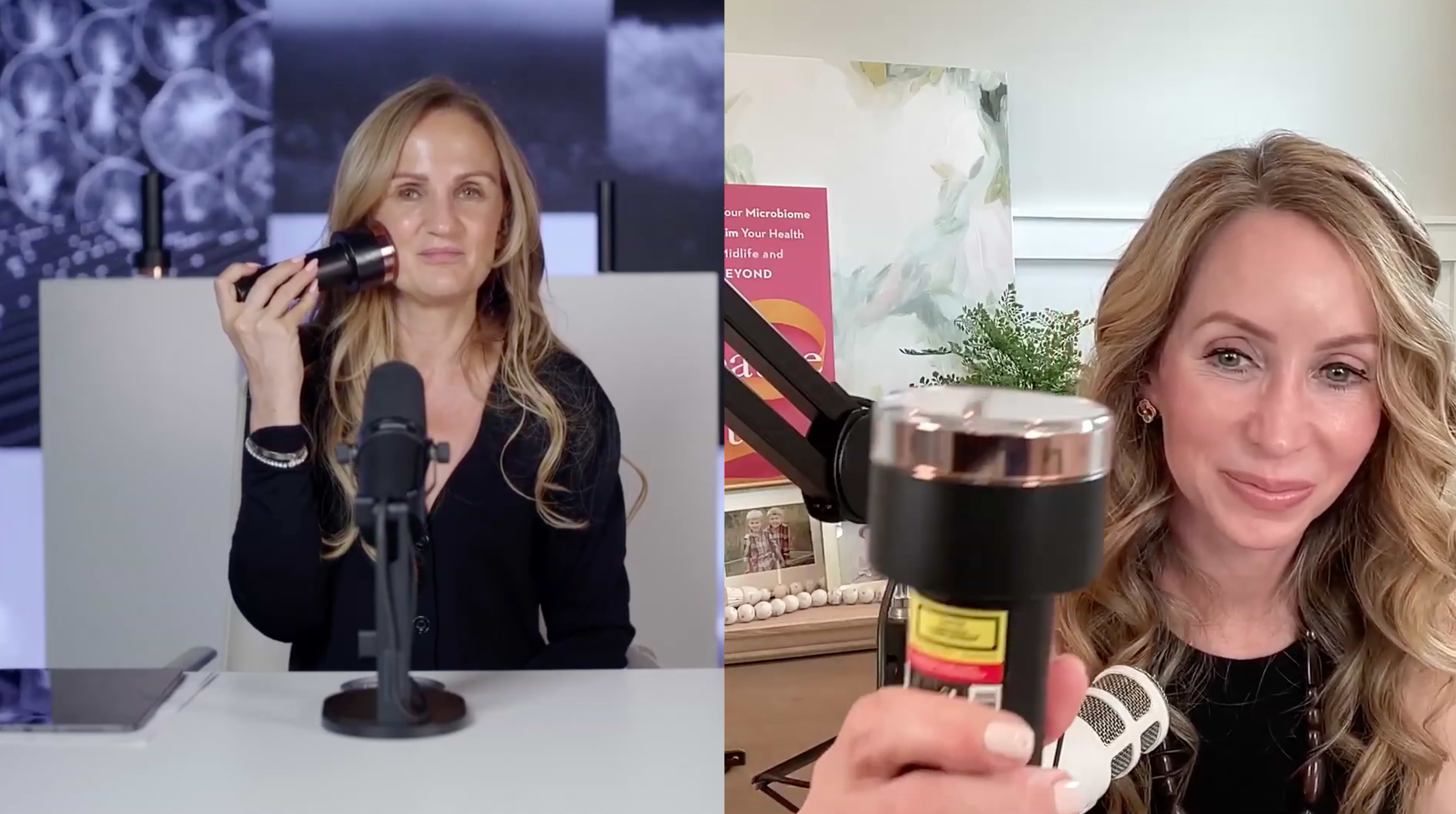
Cynthia Thurlow asked Lucy to explain how the Laser actually works on the skin. Unlike most skin technologies, the LYMA Laser is engineered to run cold at the point of contact, even though the laser itself starts out hot enough to mark a credit card before it passes through the device's cooling lenses. Read more about the science behind LYMA and how the technology was developed.
"The light goes all the way through the skin, without losing biological power, and it just couldn't be easier to use."
Lucy Goff
A study was carried out by Imperial College London to test the effect. Researchers built a device identical to the LYMA Laser, but using LED light instead of laser, matched for wavelength and power, and applied both to human skin to compare the results.
The study found a clear difference between the two light sources in how the skin responded. Full detail on the study is available on the LYMA Science page.
The GLP-1 trade-off nobody warns you about
GLP-1 medications have helped millions of people lose significant weight, but few people are warned about what that rapid loss can do to the look of the skin left behind. It was a trade-off Cynthia Thurlow wanted to unpack with Lucy Goff directly.
Given how many of her patients are now on GLP-1 medications, Cynthia asked Lucy whether LYMA customers were reporting changes in the appearance of their skin as a result of rapid weight loss. Lucy explained that two groups now make up much of LYMA Laser PRO's customer base: people recovering from surgery, and people managing the appearance of their skin after significant weight loss.
"It really does help with how the skin looks, and that's really, really important." Lucy Goff
Lucy describes the pattern that follows rapid weight loss as a kind of whack-a-mole: solve one problem, and another one shows up somewhere else."It affects you all over your body. You get rid of one problem, and then another one picks up. It's like that game when you're a child where you put one thing down and another pops up," says Lucy Goff.
Cynthia has seen the same trade-off play out publicly during awards season, watching people who were already lean end up looking, in her words, gone, emaciated or frail once more weight comes off.
"You can't pick and choose where you lose fat or volume."
Cynthia Thurlow
It's exactly the gap the LYMA Laser is designed to help close: skin that looks firmer and more toned for the face and body, without needing to reverse the weight loss itself.
The belief that pain means it's working

Cynthia Thurlow named a belief a lot of people don't realise they're carrying: that a treatment has to hurt to be doing something.
"I have been conditioned to believe most of these treatments need to be painful to be effective."
Cynthia Thurlow
Lucy Goff says that belief isn't an accident. Most in-clinic and at-home treatments work by damaging the skin on purpose, then relying on the body's repair response to change how it looks. "The whole cosmetic industry has been born on damaging your skin. But repair mode is a very quick, disordered process. It creates scar tissue, not beautiful skin," adds Lucy.
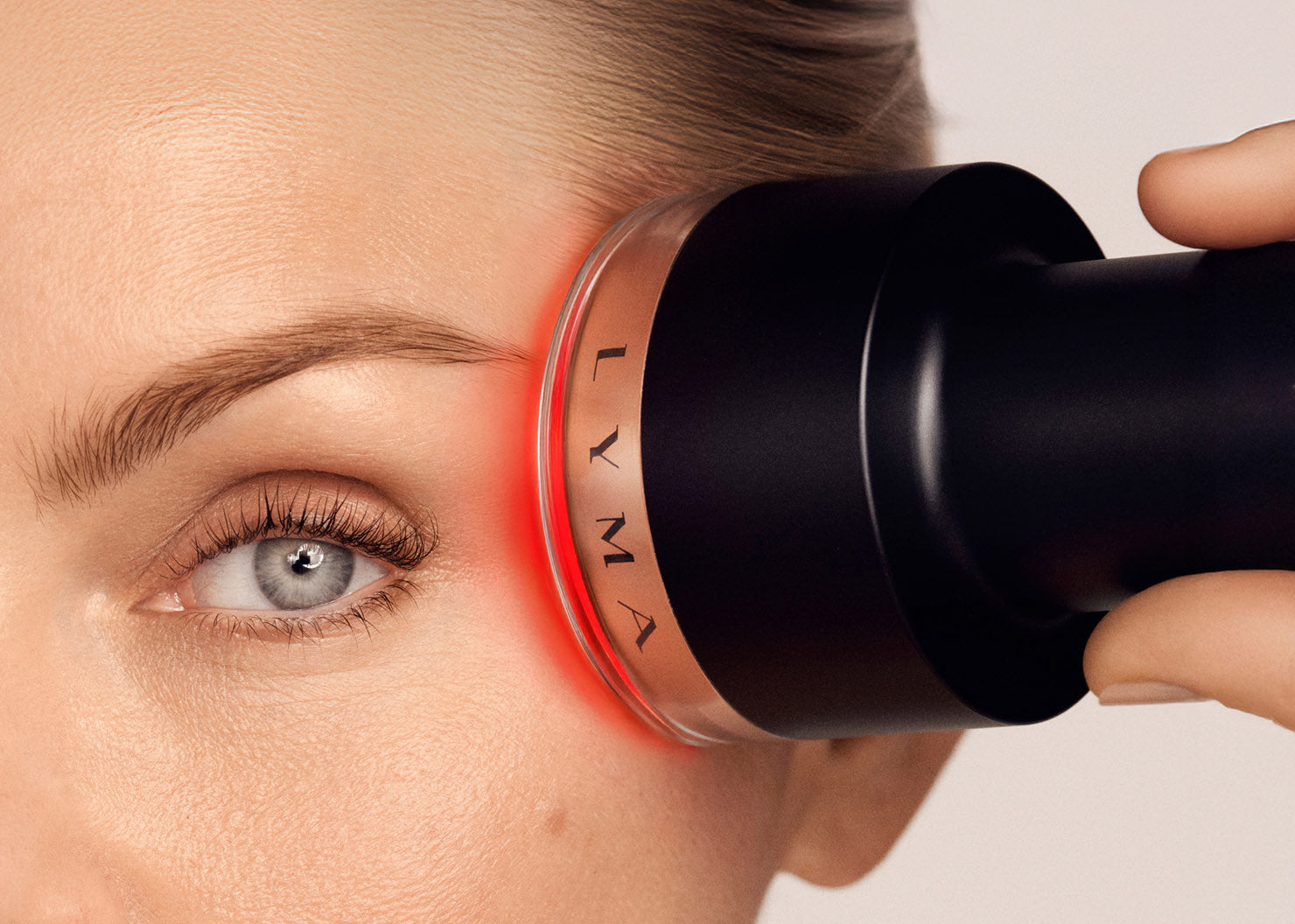
The LYMA Laser was built to break that rule. It works cold, with no sensation at all, and doesn't rely on damaging the skin to work. "Genuinely, sensationless," says Lucy Goff.
Skin changes during perimenopause and menopause
As a nurse practitioner who specialises in this stage of life, Cynthia Thurlow shared that many women notice visible changes in their skin's appearance in the years around menopause, as hormone levels shift.
Lucy has spoken openly about starting the LYMA Supplement at 45, as part of a broader routine through this stage of life that also includes regular conversations with her doctor about her hormones.
A Laser designed for every skin tone
Cynthia Thurlow raised a point she says matters to many of her patients: traditional heat-based lasers have historically carried a higher risk of visible skin marking for darker skin tones, which has excluded many people from clinic treatments altogether.
"Lasers have not historically been an inclusive technology, and that's why I'm so proud of this. It genuinely is for anyone, any gender, any skin tone, any stage of your life."
Lucy Goff
Supporting the body from the inside out
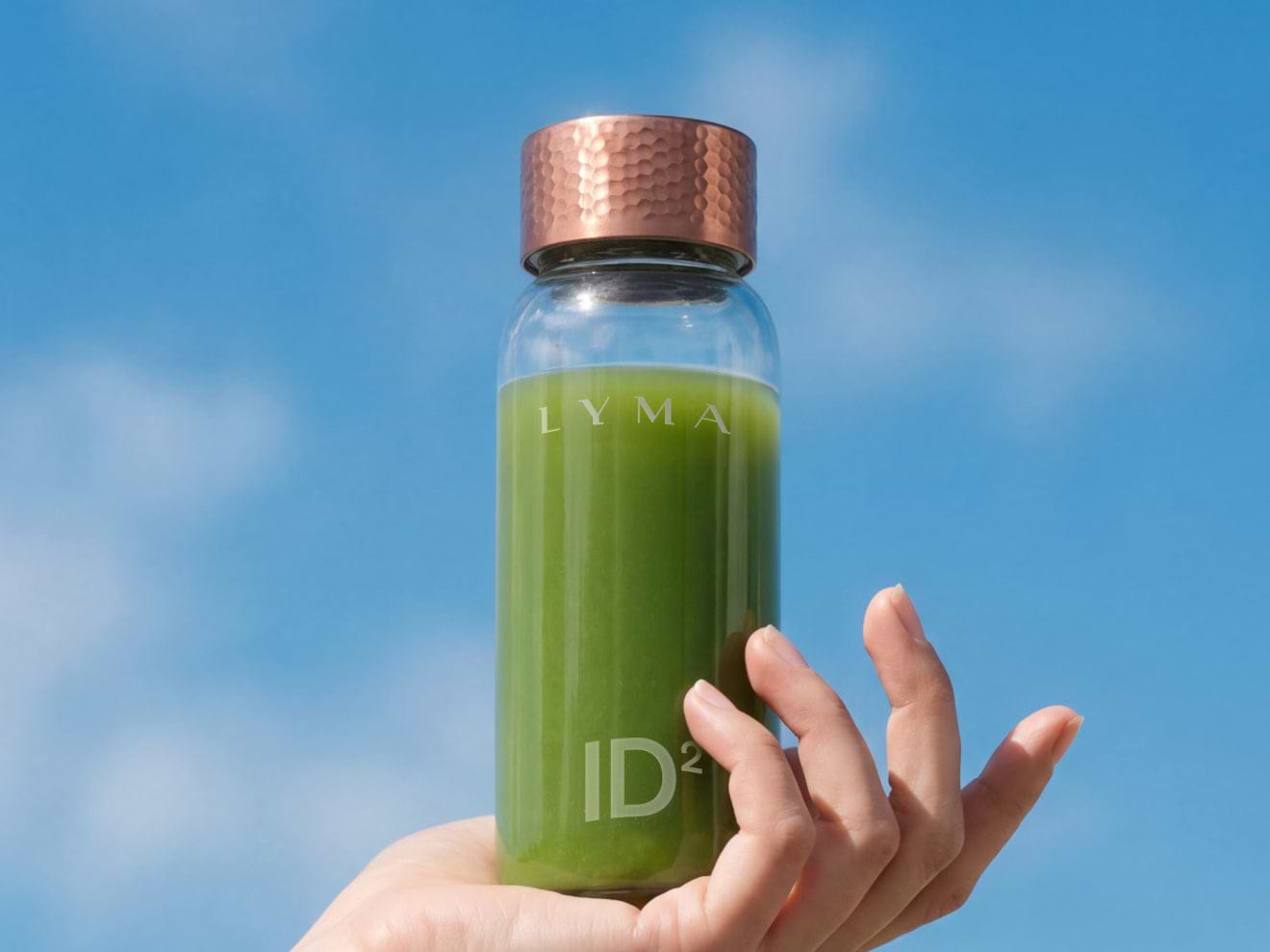
Cynthia Thurlow, who talks about gut health often on her podcast, asked Lucy about the connection between gut comfort and how skin looks and feels. Lucy explained why she moved from taking separate probiotics and prebiotics to ID², LYMA's gut health formulation. ID² combines one probiotic, alongside four prebiotics of different lengths designed to support every section of the colon by providing the essential nutrients and fibres that help feed it, a first in the world of gut health formulation. Modern diets typically contain a fraction of the fibre earlier generations ate.
"If your gut is working really well, your skin looks even more glowing."
The LYMA Supplement also includes Wellmune® Blend, which supports normal immune function.
No pain, no downtime, no excuses
Because the Laser is cold at the skin, there's no sensation during treatment, and no recovery time afterward, a contrast to the swelling and downtime associated with many in-clinic treatments.
"Knowing that you can have that level of effectiveness without downtime, and being able to do it at home on a daily basis, is really groundbreaking."
Cynthia Thurlow
More than a face treatment
Cynthia Thurlow also asked about using the Laser beyond the face. Customers use the LYMA Laser across the face, neck, décolletage and body, including knees, inner arms and thighs, to help with the appearance of pigmentation, age and liver spots, blemish scarring, other scarring, rosy skin, wrinkles and fine lines. "If your daughter's got blemish scarring, I guess it's kind of the Swiss army knife," concludes Goff.
Explore LYMA Journal for more real stories and skin science and why not try the LYMA Laser PRO today:


