


How to get firmer-looking skin at home, how cold laser compares, and how to use it well.
Searching for the best at-home laser for skin tightening means sorting through radiofrequency wands, ultrasound gadgets, LED masks and lasers that all promise firmer skin. This guide explains why skin starts to look less firm, how at-home laser skin tightening differs from other technologies, what to check before you buy, and how to use a device for the best-looking results.
It’s written for anyone noticing a softer jawline, looser-looking skin on the neck or a loss of bounce, who wants a heat-free option they can use at home with no downtime.
Why does skin start to sag?
Skin’s firmness depends on collagen and elastin, the proteins that give it structure and spring. As we age, skin produces less of both, and it gradually looks less firm. UV exposure, smoking, significant weight changes and the skin changes many women notice in their 40s and 50s all play a part.
The first signs often show along the jawline and lower face, and on the neck, where skin is thinner. Read more in our guide to sagging jowls.
Are at-home laser devices effective for skin tightening?
It depends on the technology, and on what you expect from it. Many in-clinic lasers use controlled heat, which needs clinical power levels and recovery time, so home versions are much weaker or not available.
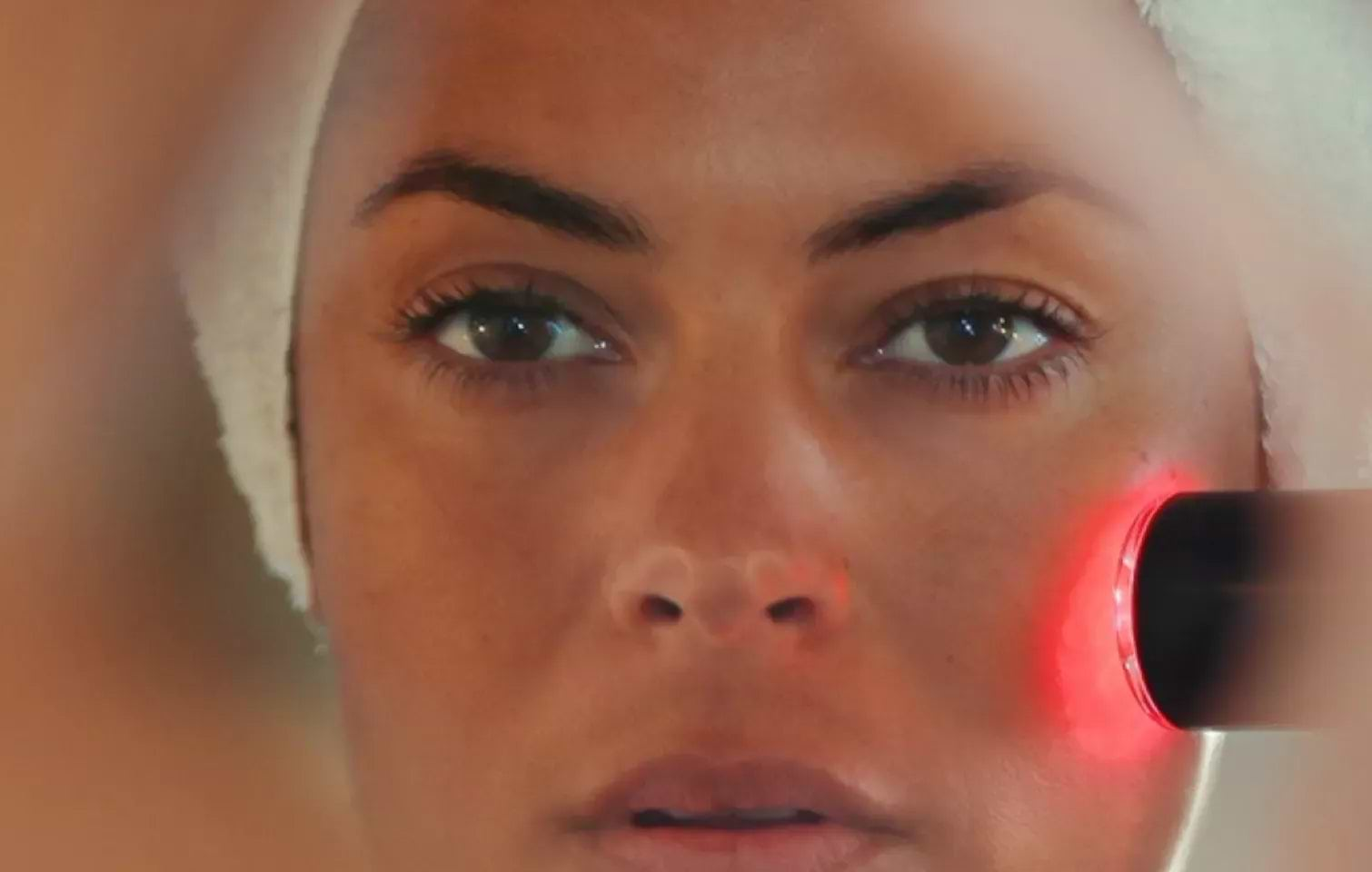
Cold laser works without heat, so it can be used every day with no downtime. The LYMA Lasers use an 808nm near-infrared cold laser, designed to help skin look firmer, smoother and more radiant with consistent use.
“One of the most exciting and innovative products to have been developed for the purpose of skin rejuvenation.” Dr Graeme Glass, plastic and craniofacial surgeon
Dr Glass is LYMA’s Aesthetic Director and a LYMA shareholder.
How at-home skin tightening technologies compare
Each technology works in a different way. Here’s how the main options compare.
Radiofrequency (RF)
RF devices use gentle heat to firm the look of skin. Home devices run at lower energy than clinic machines, and heat-based treatments carry more risk of dark marks after treatment in deeper skin tones.
Focused ultrasound (HIFU-style devices)
Focused ultrasound also uses heat. Clinic treatments can give a noticeable lift, but home devices are lower powered and many people find treatment uncomfortable.
Microcurrent
Microcurrent uses low-level electrical currents and can give a temporary lifted look.
LED light therapy
LED masks and wands use scattered, non-coherent light. Laser light is coherent and focused, so the two are different kinds of light altogether. Read more on the difference between LED and laser light therapy.
Can you do laser resurfacing at home?
True fractional or CO₂ resurfacing is a clinic treatment that needs numbing and recovery time. Home devices sold as “fractional” work at much lower energy. If resurfacing is what you’re after, speak to a consultant dermatologist.
How to choose the best at-home laser for skin tightening
Whichever device you’re considering, check these five things.
Light source and wavelength. Laser and LED are different light sources. Check which one you’re buying, and at what wavelength.
Power output. Ask for the figure in milliwatts, so you can compare devices like for like.
Heat-free or heat-based. Heat-free devices can be used daily with no downtime. Heat-based devices need longer gaps between sessions.
Lens size and time per area. A bigger lens covers more skin each time you place it, which shortens sessions.
Evidence behind the claims. Look for published research on the device or its technology, and check what it actually measured.
LYMA Laser or Laser PRO?
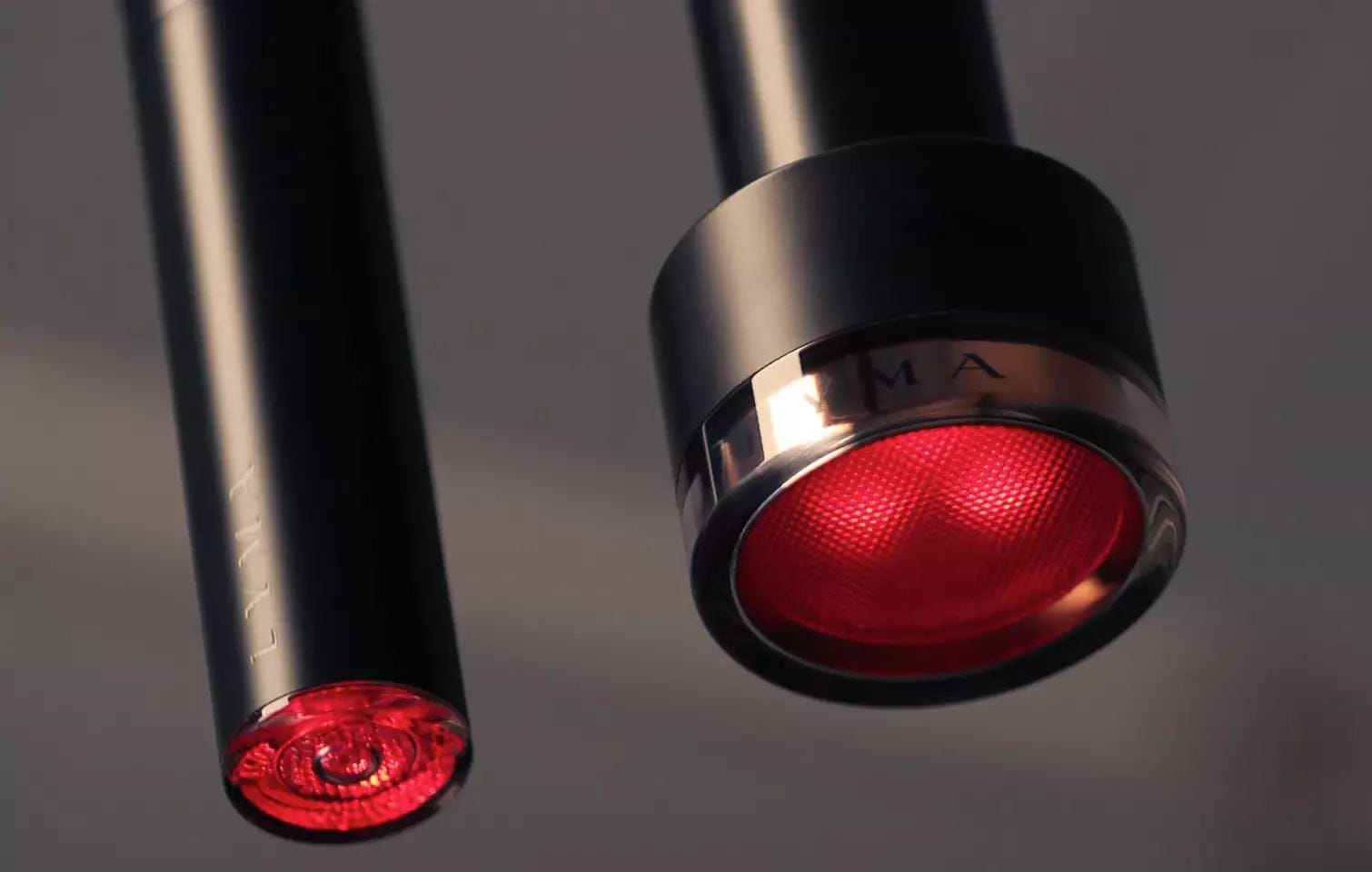
Both LYMA Lasers use the same 808nm near-infrared cold laser technology, need no downtime and are designed for daily use at home.
LYMA Laser: 500mW, an 8cm² lens and 3 minutes per area.
LYMA Laser PRO: three LYMA laser modules in one device, 1,400mW, a 30cm² lens and 3 minutes per area.
Read real customer experiences on our LYMA Laser reviews page.
What about wrinkles?
If the appearance of fine lines and wrinkles is your main concern, see our guide to the best at-home laser for wrinkles.
How to use an at-home laser on your face, neck and body
Start with clean, dry skin. Hold the laser flat against the skin and work slowly in sections across the face, jawline, neck and décolletage, or on the body, such as the arms. Each area takes 3 minutes, and a full face-and-neck session takes around 15 minutes.
LYMA recommends using the laser daily for the first 12 weeks, then three sessions a week to maintain results. Apply your usual serum and moisturiser afterwards.
What results to expect
Changes in how firm skin looks are gradual. Most people need several weeks of consistent use before they notice a difference, and results vary with age, skin type and how regularly the device is used.
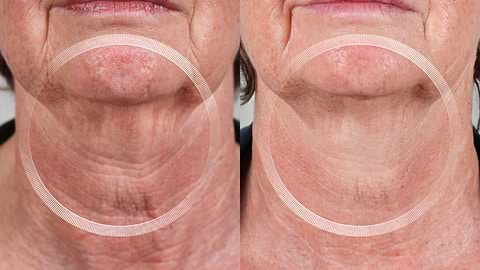
Neck, before and after 30 days with the LYMA Laser PRO. Customer image. Individual results vary.
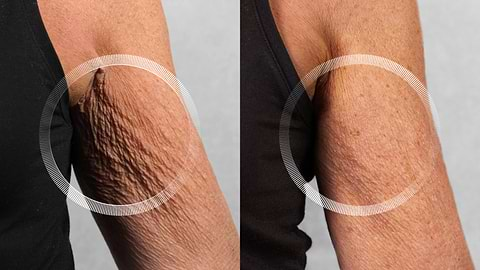
Upper arm, before and after 30 days with the LYMA Laser PRO. Customer image. Individual results vary.
Ageing continues after any treatment, so maintenance matters whether you choose a clinic or a home device.
At-home laser vs in-clinic skin tightening: cost and downtime
In-clinic RF microneedling, focused ultrasound and laser tightening are priced per session, from several hundred to a few thousand pounds, and most people need a course plus top-ups. Heat-based treatments can also mean redness, swelling or days of downtime.
An at-home laser costs more upfront but has no per-session fee and no recovery time.
Your questions about at-home laser skin tightening
Can laser devices for skin rejuvenation be used at home?
Yes. Home devices are built to lower energy levels than clinic lasers so they’re suitable for use without supervision. Heat-free cold lasers, like the LYMA Lasers, are designed for daily use with no downtime. Clinic resurfacing lasers are not suitable for home use.
What is the best at-home laser for skin tightening?
The right device depends on your skin and how much time you have. Look for a heat-free laser with a stated wavelength and power output and published research behind it. Then choose one you’ll use consistently.
Can I use an at-home laser on my neck and jawline?
Yes. The neck and jawline are among the most common areas people include in a home routine, because skin there is thinner and shows changes early. The LYMA Lasers can be used on the face, neck and décolletage, and on the body. Results vary.
Is the LYMA Laser suitable for all skin tones?
The LYMA Laser is a cold laser, so it doesn’t rely on heat, which is the main cause of dark marks after heat-based treatments in deeper skin tones. It is designed for use on all skin tones.
How often should I use a home laser for skin tightening?
It depends on the device. LYMA recommends using the LYMA Laser daily for the first 12 weeks, then three sessions a week to maintain results.
What actually works for improving skin firmness without injectables or surgery?
The foundations are daily SPF, not smoking, protein-rich nutrition, strength training and a consistent skincare routine. In-clinic energy treatments and at-home devices can add to that.
How much does in-clinic skin tightening cost compared with an at-home laser?
In-clinic tightening is usually priced per session, often hundreds to thousands of pounds, with repeat sessions needed. At-home lasers cost more upfront but can be used daily for years with no per-session fee.
Does sagging skin come back after treatment?
Ageing continues after any treatment, so results need maintenance. With the LYMA Laser, LYMA recommends switching to three sessions a week after the first 12 weeks.
Find the right LYMA for you
Firmer-looking skin at home comes down to the right technology and consistent use. If you’re not sure which LYMA suits your skin and routine, our quiz will point you in the right direction.


