

Top facelift surgeons work in the deep plane. Here’s why the face ages from beneath.
Ask a top facial plastic surgeon where ageing really happens, and they won’t point to a wrinkle. They’ll point beneath it.
Skin is the part you can see. But the shape of a face, the lift of a cheek, the line of a jaw, is held up by an architecture most of us never think about: a network of ligaments, muscles and fat pads that sits in what surgeons call the deep plane. When that architecture is young, the skin above it is held high and firm. When it loosens and weakens, everything above it follows.
This is why the deep plane facelift has become the operation of choice for the world’s most sought-after surgeons.
Why surgeons work in the deep plane
“There’s a reason why many top facelift surgeons favour the deep plane,” says Graeme Glass PhD, consultant plastic, craniofacial and aesthetic surgeon and LYMA’s Director of Aesthetics. “This is the plane wherein support for the face lies. In the facial ligaments, muscles and fat pads.”
A traditional facelift tightens from the surface, pulling skin to create lift. The result can look tight rather than young. A deep plane lift works underneath, releasing the retaining ligaments and repositioning the deeper tissues as one unit, so the skin simply re-drapes over a restored foundation. It looks like you, younger, because the structure itself has been put back where it belongs.
It is the most technically demanding approach in facial surgery, and in the right hands, the most natural.
What surgery can and cannot do
Yet even the finest deep plane lift has a limit.
“At present, surgery can only reposition and re-tension these structures,” says Glass.
Some surgeons add fat grafting: harvesting fat from elsewhere in the body and reinjecting it into the face. “It is invasive and inexact,” says Glass.
The LYMA Laser: the Power to Change Your Skin

Surgery works beneath the skin. The LYMA Laser was designed for the skin itself: the part you see. It uses cold, near-infrared laser light, with no heat and no downtime, to transform the appearance of skin on the face and body.
Used daily, it helps improve the appearance of fine lines and wrinkles, the look of scars, rosy skin and blemishes, for skin that looks smoother, firmer and more radiant.
And its effect is cumulative. Each daily session builds on the last, so the longer it is used, the more visible the results.
The surgeons who use the LYMA Laser
LYMA was engineered with plastic surgeons, not just for them, and it is in their hands today.
Graeme Glass PhD, MD, FRCS(Plast) specialises in deep plane face and neck lifts in London, and is a contributing editor of the Aesthetic Surgery Journal. As LYMA’s Director of Aesthetics, he led the clinical research behind the LYMA Laser and created the LYMA Lift, a facial protocol built around it.
Dr Jason Diamond, the Beverly Hills facial plastic surgeon trusted by some of the most photographed faces in the world, offers the LYMA Laser Lift as an in-clinic treatment at his Diamond Face Institute.
They are joined by leading dermatologists including Dr Dan Belkin and Dr Dendy Engelman, and by the aesthetician Joanna Czech, who uses the LYMA Laser in her treatment rooms in New York and Dallas.
Why ageing begins beneath the surface
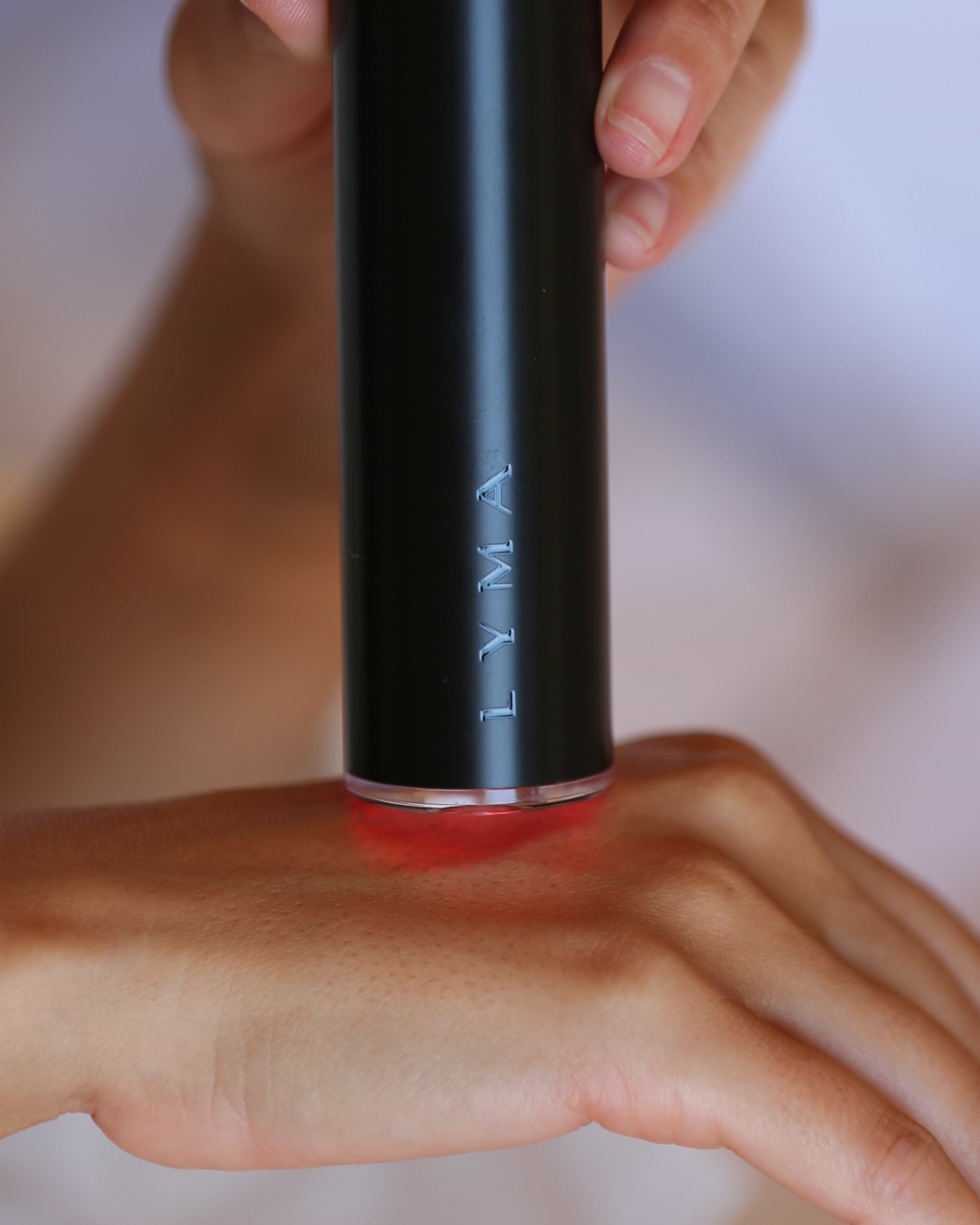
For decades, beauty has focused on the part of the face you can see. The surgeons who get the best results have always known better. The face is held up from beneath, and that is where ageing begins.
Skin is the part you can see. And the part the LYMA Laser was made for.
Facial ageing FAQs
What is the deep plane of the face?
The deep plane is the layer beneath the skin where the facial ligaments, muscles and fat pads sit. It supports the shape of the face, from the lift of the cheek to the line of the jaw.
Does the LYMA Laser use heat?
No. The LYMA Laser uses cold, near-infrared laser light, with no heat and no downtime.


