
Silicone sheets and pressure can help flatten a keloid. DIY removal and most home remedies can’t.
If you’re looking for ways to flatten a keloid at home, you’ve probably noticed that keloids don’t behave like other scars. They grow past the edge of the original wound, they can itch or feel tender, and they rarely fade on their own [2].
Some at-home steps genuinely help, especially for prevention and alongside clinic treatment. But for an established keloid, the most effective options are delivered by a doctor, usually a dermatologist or plastic surgeon, and no single treatment works for everyone [1][4]. This guide sets out what the evidence supports, what it doesn’t, and where at-home devices fit (and where they don’t).
The short answer
Silicone gel sheets and, for earlobe keloids, pressure earrings are the best-supported things you can do at home, and both work best with guidance from your GP or a dermatologist [1][3]. Protecting healing skin from the sun and telling your surgeon if you’re keloid-prone help with prevention [3]. Cutting, freezing or tying off a keloid yourself is unsafe, and even surgical removal by a doctor isn’t usually recommended on its own, because the keloid is likely to grow back bigger [9].
What is a keloid, and how is it different from a raised scar?
A keloid is a raised scar that grows beyond the boundary of the original injury. It can follow something as small as a piercing, a blemish, a burn or a surgical cut, and it may be pink, red, purple or darker than the surrounding skin [2][9]. Keloids most often appear on the earlobes, chest, shoulders and upper back, and they’re more common in people with darker skin tones and in people with a family history of them [2][5].
A hypertrophic scar can look similar, but it doesn’t extend beyond the edges of the original wound [11]. The two can respond differently to treatment, which is one reason a diagnosis comes first. Your GP can also confirm that a firm, growing lump at a scar or piercing site is a keloid and not something else.
Why keloids are so hard to shift
Ordinary healing moves through inflammation, rebuilding and, over many months, remodelling, when a raised scar gradually softens and flattens. You can read more about that process in our guide to understanding scars. In a keloid, the repair process produces far more collagen than it should, so the scar keeps growing instead of settling [11].
Once a keloid stops growing it tends to stay the same size, and it rarely fades without treatment [2]. The realistic aim of treatment is to flatten and soften the keloid, ease symptoms such as itching, and lower the chance of it returning, rather than to make it disappear overnight [1][4].
How to flatten a keloid at home: what the evidence supports

Silicone gel sheets for keloids
Silicone sheets are the at-home option dermatologists use most. They may help flatten a keloid, and they’re also used after a procedure to reduce the chance of one coming back [1][4]. They’re painless and low risk [5], but they need patience: in studies, people typically wear them for 12 to 24 hours a day over many months [7]. Your GP, dermatologist or pharmacist can recommend a suitable silicone product [10].
Never apply a silicone sheet to a scab or an open wound. Wait until the skin has fully closed [1]. If your skin becomes irritated, stop and check with your GP or pharmacist.
Pressure earrings for earlobe keloids
Steady pressure can help stop a keloid returning after treatment. For earlobes this usually means a pressure earring; elsewhere it may be a pressure dressing or garment. Pressure works best when it starts as soon as thickening appears, and a specialist can fit the device so it’s both effective and safe [1][3].
Sun protection while skin heals
Keep a healing wound protected from the sun. Keloids take time to appear, so keep protecting the area after the wound has closed [3].
Prevention if you’re keloid-prone
If you or a blood relative form keloids, tell your surgeon or the practitioner performing any procedure beforehand. They can take precautions and may recommend treatment straight afterwards [3]. Think carefully about elective procedures that break the skin, including piercings, tattoos and cosmetic treatments, and ask whether a test spot makes sense first [3].
What doesn’t work at home, and what to avoid
Don’t cut, tie off, freeze or burn a keloid yourself. Home freezing kits, wart removers and string aren’t designed for scar tissue, and a new injury to keloid-prone skin can trigger a new keloid. Keloids that return after removal can be larger than the original [5][9], and even when a doctor removes one surgically, nearly all return if surgery is the only treatment [1].
Remedies shared online, such as tea tree oil, rest mainly on anecdote rather than good-quality trials for keloids [8]. If a product promises to “dissolve” or “remove” a keloid at home, treat that claim with caution.
At-home devices and clinic lasers: what each can do
What clinic lasers do
In clinic, lasers such as the pulsed dye laser and the ablative CO2 laser can reduce a keloid’s height and fade its colour. They’re usually combined with other treatments, such as steroid injections or pressure, rather than used alone [1][6]. These are professional devices, operated by trained clinicians who adjust the settings for each scar. Even so, the published evidence is mostly small studies, and a 2017 review found no randomised controlled trials of CO2 or Er:YAG lasers for keloids [6]. In the UK, laser treatment and steroid injections for scars aren’t widely available on the NHS, so you may need to pay privately [10].
What at-home devices can and can’t do
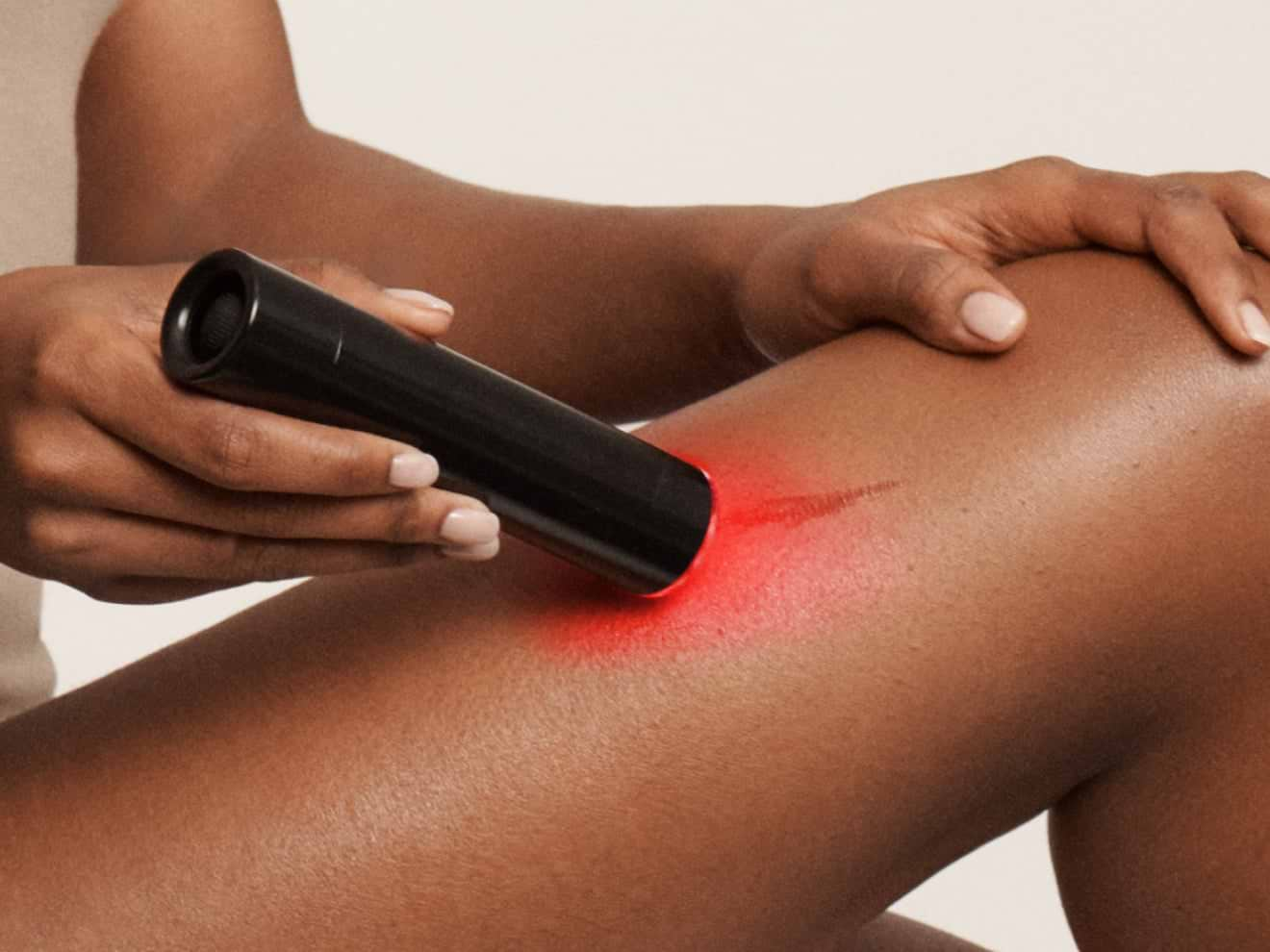
Consumer red and near-infrared light devices deliver far less energy than clinic lasers and don’t remove or reshape scar tissue. We’re not aware of any at-home device intended to treat keloids in particular. Check what a device’s maker says it’s for, and ask your GP before using one on a keloid.
How doctors treat keloids
Most specialists combine treatments, because combinations tend to work better than any single approach [1][4].
Steroid injections are usually the first step. Given over a series of visits, they can flatten and soften a keloid, although many treated keloids regrow within five years [4]. Steroid-impregnated tape, applied for 12 hours a day, is another option your GP or dermatologist can prescribe [10].
Surgery is almost always paired with something else, such as injections, pressure, cryotherapy or radiotherapy, because nearly all keloids return after surgery alone [1].
Cryotherapy (freezing) works best on small keloids, but it can lighten the skin, so it may not be recommended for darker skin tones [1][10].
Laser treatment can reduce a keloid’s height and colour, usually alongside injections or pressure [1].
Silicone sheets and pressure are often recommended after another treatment to help stop the keloid returning [4].
No treatment consistently gets rid of a keloid, and what works for one person may not work for another [4]. Starting soon after a keloid appears gives treatment the best chance [5].
When to see your GP
See your GP if a scar is growing beyond the original wound, is itchy, painful or tender, limits movement, keeps returning after treatment, or is affecting how you feel about yourself [2][9]. Your GP can recommend treatment or refer you to a dermatologist or plastic surgeon [10].
If you’re keloid-prone and planning surgery, a piercing or a cosmetic procedure, speak to your GP or a dermatologist beforehand [3].
Frequently asked questions
Can you flatten a keloid at home?
You can support treatment at home with silicone sheets and, for earlobes, pressure earrings, and you can lower your risk of new keloids. Shrinking an established keloid usually needs clinic treatment, such as steroid injections [1][3].
Do at-home lasers work on keloids?
There isn’t good evidence that consumer light devices treat keloids. Clinic lasers can help, usually combined with other treatments [1][6].
Can I use the LYMA Laser on a keloid?
No. The LYMA Laser isn’t intended for keloids. If you think you have one, see your GP first.
Can a keloid be removed permanently?
No treatment guarantees a keloid won’t return. Combining treatments gives the best odds [1][4].
Will a keloid go away on its own?
Rarely. Once a keloid stops growing, it usually stays the same size [2].
Are keloids dangerous?
Most keloids are harmless, but they can itch, hurt, restrict movement over a joint and affect self-esteem, which are all good reasons to seek treatment [2].
Improving the appearance of other scars at home
Keloids usually need medical care but most scars aren’t keloids. If yours is flat or only slightly raised, has fully healed and stays within the edges of the original wound, you can do more at home to improve how it looks. If you’re not sure which type you have, check with your GP first.
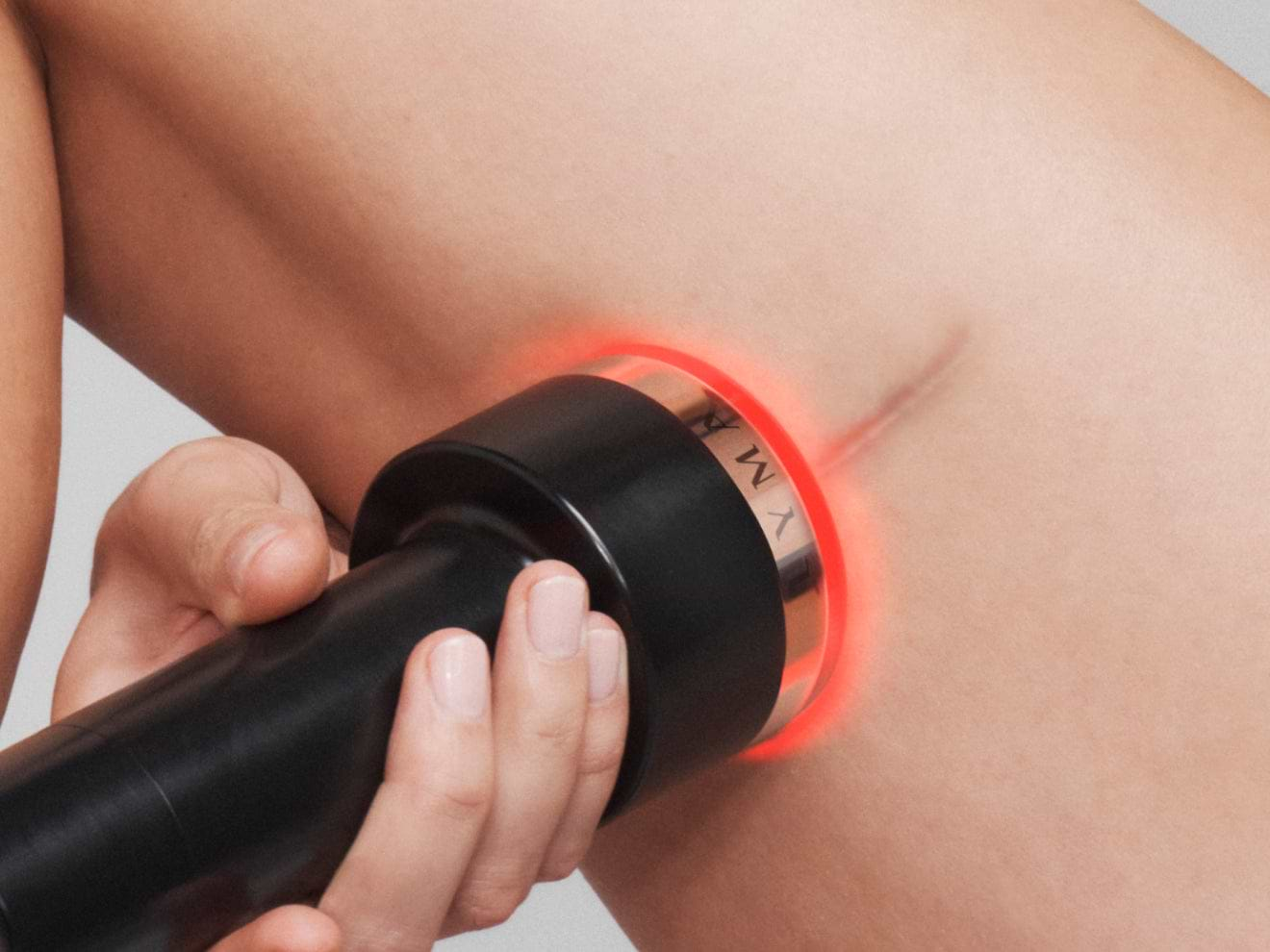
The LYMA Lasers are handheld cold lasers for at-home use, designed to improve the appearance of scars and blemish marks. You use it for three minutes per area, once a day, and there’s no heat involved, so it fits easily into an evening routine.
Real results, and how they were recorded
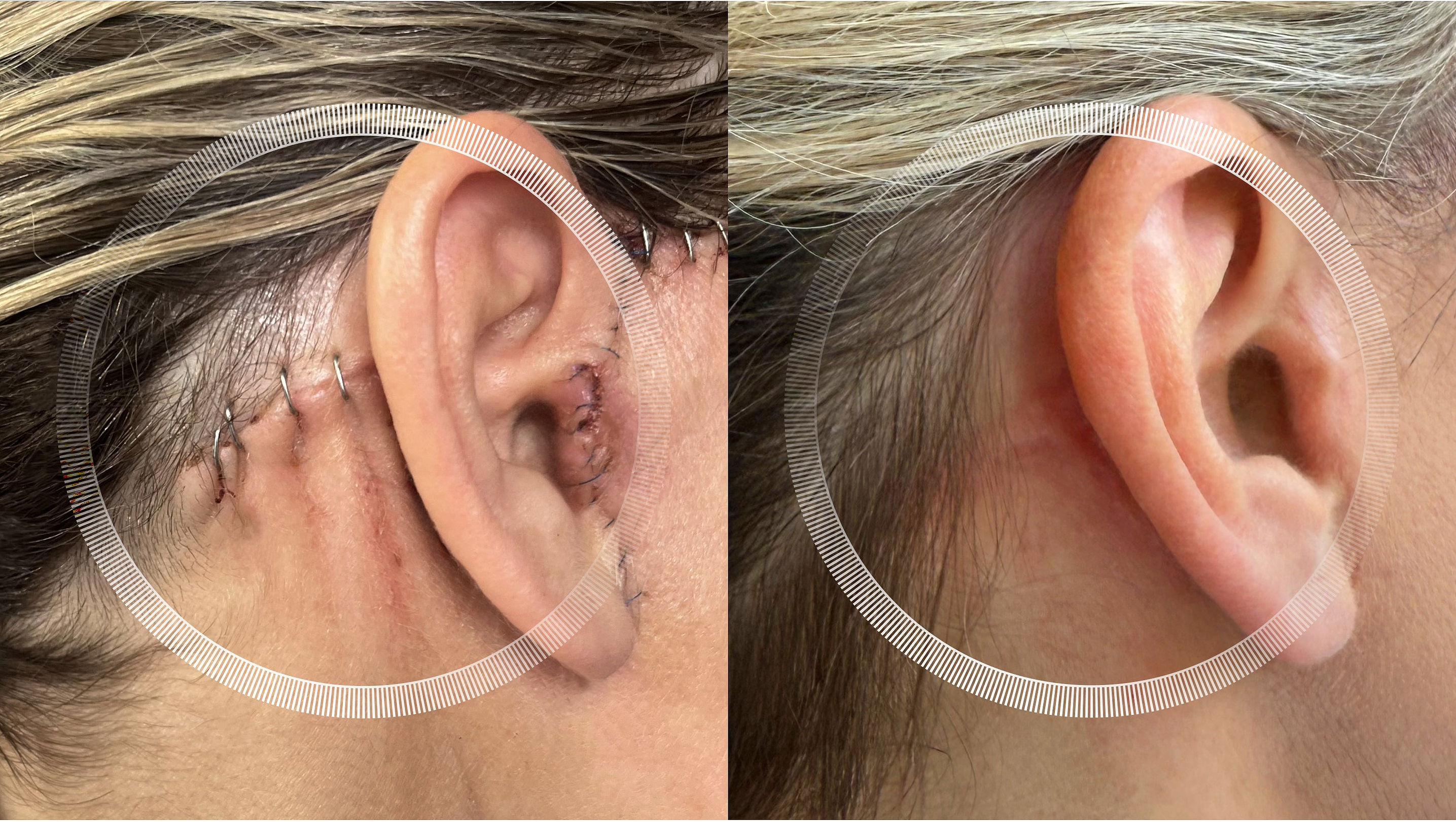
Every before-and-after image here comes from a LYMA customer whose use of the Laser is logged. Each pair shows the same area on day 1 and day 30 of daily use, taken in the same light and position. None of these scars is a keloid, and results vary from person to person.
Chest scar after open-heart surgery*. Day 1 and day 30 of daily use with the LYMA Laser, three minutes per area. 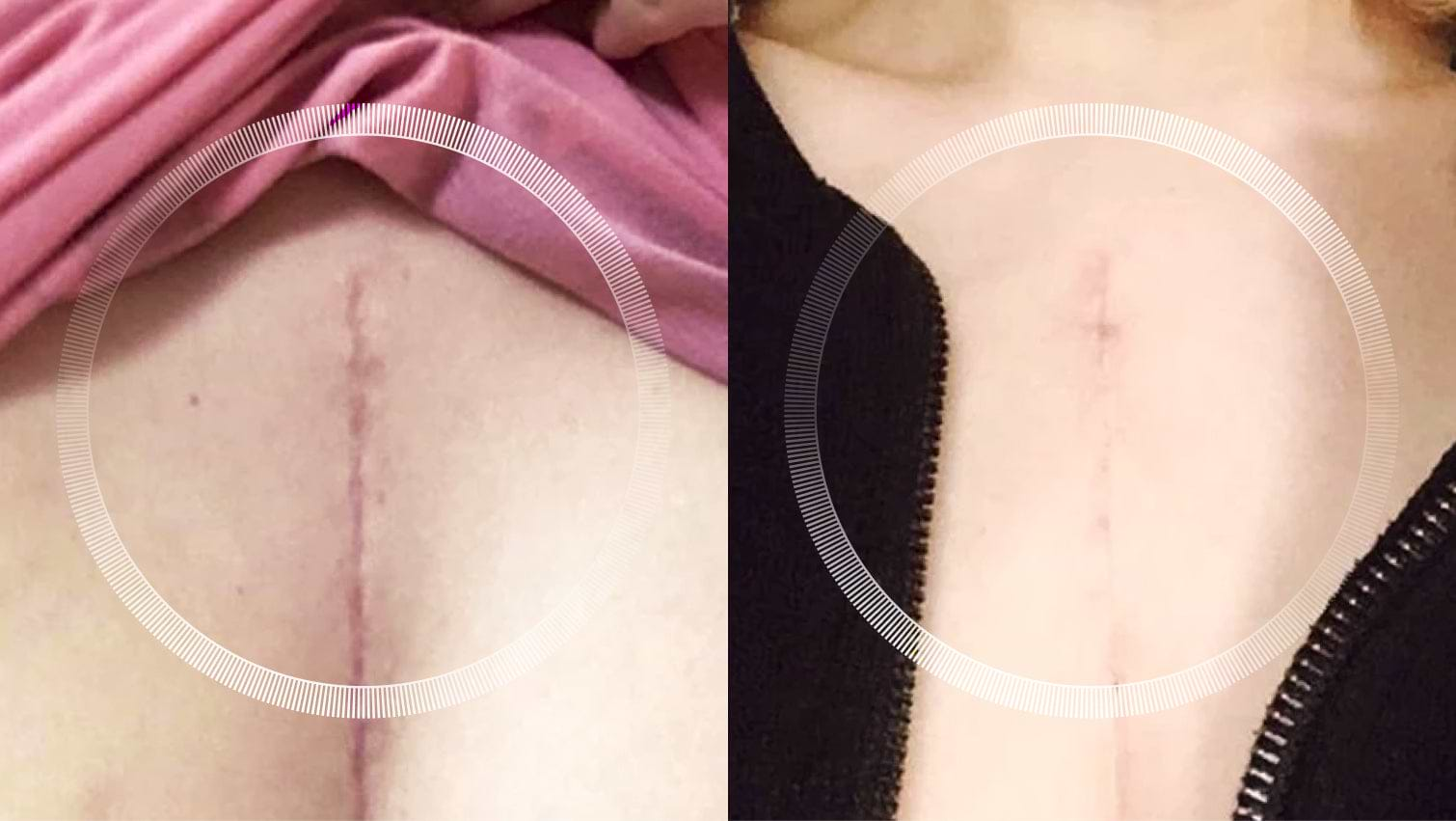
Knee scar, started 10 months after knee replacement surgery*. Day 1 and day 30 of daily use with the LYMA Laser PRO, three minutes per area.

Scar after a mini facelift*. Day 1 and day 30 of daily use with the LYMA Laser PRO, three minutes per area.
Marks left by past blemishes*. Day 1 and day 30 of daily use with the LYMA Laser, three minutes per area.

LYMA recommends using the Laser daily for three months, then twice a week to maintain results. Older scars may need longer. For the smoothest glide, use it over LYMA Power Youth Mist and Mask, and take a photo before you start so you can track your own progress.
*Individual results vary.
For larger areas
For larger scars, such as on the chest or abdomen, the LYMA Laser PRO has a 30cm² lens, so each three-minute session covers more skin. Read how one customer felt about her scar in The Scar She Learned to Stop Hiding.
Not sure which LYMA suits you?
This article is for general information only and isn’t a substitute for advice from your GP or dermatologist. Find more expert guides in the LYMA Journal.
Sources
1. American Academy of Dermatology. Keloids: Diagnosis and treatment. https://www.aad.org/public/diseases/a-z/keloids-treatment
2. American Academy of Dermatology. Keloids: Signs and symptoms. https://www.aad.org/public/diseases/a-z/keloids-symptoms
3. American Academy of Dermatology. Keloids: Self-care. https://aad.org/public/diseases/a-z/keloids-self-care
4. American Academy of Dermatology. Keloids: Overview. https://www.aad.org/public/diseases/bumps-and-growths/keloids
5. Harvard Health Publishing. Keloids (reviewed by Howard E. LeWine, MD). https://www.health.harvard.edu/a_to_z/keloids-a-to-z
6. Forbat E, Ali FR, Al-Niaimi F. Treatment of keloid scars using light-, laser- and energy-based devices: a contemporary review of the literature. Lasers Med Sci. 2017. https://doi.org/10.1007/s10103-017-2332-5
7. Keloids: Which treatment is best for your patient? J Fam Pract (MDedge). https://www.mdedge.com/content/keloids-which-treatment-best-your-patient/page/0/1
8. Review of current and emerging keloid treatments. Dermatol Ther (Heidelb). 2020. https://doi.org/10.1007/s13555-020-00427-2
9. NHS. Keloid scars. https://nhs.uk/live-well/healthy-body/keloid-scars
10. NHS 111 Wales. Scars. https://111.wales.nhs.uk/Scars
11. nidirect. Scars. https://nidirect.gov.uk/conditions/scars


