

Laser mask or LED mask? Experts explain the science, the differences, and which really works.
The beauty device market has never been more crowded - or more confusing. Laser masks, LED masks, red light panels, LLLT wands: the terminology alone is enough to make anyone's head spin. So what's the real difference between a laser face mask vs LED light, and does it actually matter which you choose?
The short answer: yes, significantly. A laser mask vs LED mask comparison isn't just about price or brand - it comes down to the fundamental physics of light, how deeply it travels into the skin, and what it can realistically achieve once it gets there. This guide, written with input from Dr Graeme Glass PhD, cuts through the noise.
What Is a Laser Mask - and What Does It Do?
A laser light therapy mask uses coherent, monochromatic, polarised laser light - typically in the near-infrared spectrum - to reach the deeper layers of the skin. Unlike scattered light sources, laser light travels in a straight, focused beam with no loss of intensity as it penetrates tissue.
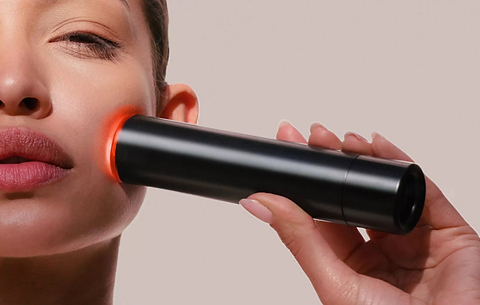
What does a laser mask do? At its most precise, a laser light therapy mask delivers a specific dose of energy to the dermal layer, where it interacts with cells to support the appearance of smoother, more even-looking skin. The LYMA Laser, for instance, uses 808nm near-infrared laser technology - the same wavelength established over decades of medical laser research - engineered into a device safe for daily home use.
This process, known as photobiomodulation or Low-Level Laser Therapy (LLLT), activates cellular energy production, stimulates collagen synthesis and has been clinically shown to support skin elasticity and the visible reduction of facial wrinkles.
Key characteristics of laser light therapy devices:
- Coherent light - travels in a single-direction beam
- Monochromatic - one precise wavelength (e.g. 808nm)
- Polarised - maintains orientation as it passes through tissue
- Speckle effect - a phenomenon unique to laser light associated with deeper biological stimulation
- Zero heat, zero damage (in the case of cold laser / LLLT technology)
What Is an LED Face Mask - and How Is It Different?
LED (light-emitting diode) face masks emit scattered, incoherent light across a broader spectrum. LED light is not polarised or coherent - it disperses in multiple directions when it meets a surface. Think of it like the difference between a laser pointer and a lamp: both produce light, but only one travels in a precise, penetrating beam.
Research suggests that approximately 95% of LED light bounces off the surface of the skin, with only around 5% making it through the top epidermal layer. LED devices can offer a superficial effect at the epidermis, which is why they are popular for temporary brightening - but they do not have the penetrative capacity of laser technology.
LED face masks have grown enormously in popularity - brands like CurrentBody and Omnilux have driven mainstream adoption - and they can form a useful part of a skincare routine. The important question is: are home laser devices better than LED when it comes to meaningful, lasting change to the appearance of the skin? The science points clearly in one direction.
Laser Therapy vs LED Mask: The Core Scientific Differences
Here is where the led vs laser mask comparison becomes unambiguous. The distinctions are not marketing claims - they are established properties of different light sources.
|
Property |
Laser (e.g. LYMA Laser) |
LED Face Mask |
|
Light type |
Coherent, monochromatic, polarised |
Incoherent, scattered, broad spectrum |
|
Skin penetration depth |
Deep dermal layers |
Primarily epidermal surface |
|
Bounce-back from skin |
Minimal |
~95% of light reflected |
|
Laser speckle effect |
Yes - amplifies biological stimulus |
No |
|
Downtime required |
None |
None |
|
Peer-reviewed evidence |
Yes - 5 papers, Aesthetic Surgery Journal |
Limited, mostly lower-grade studies |
|
38 global patents |
Yes (LYMA) |
No |
|
Safe for all skin tones |
Yes (zero-damage technology) |
Generally yes |
Cold Laser Therapy vs Red Light Therapy: Are They the Same?
This is one of the most common points of confusion in the at home laser vs LED mask conversation. Red light therapy, LED panels and cold laser therapy are often grouped together - but they are fundamentally different technologies.
Red light therapy typically refers to LED-based devices emitting wavelengths in the 630–700nm visible red spectrum. They are non-laser, incoherent light sources. Cold laser therapy (also known as Low-Level Laser Therapy or LLLT) uses true laser light - coherent, monochromatic, polarised - at specific wavelengths in the red or near-infrared spectrum, delivered at a power level that causes no thermal damage.
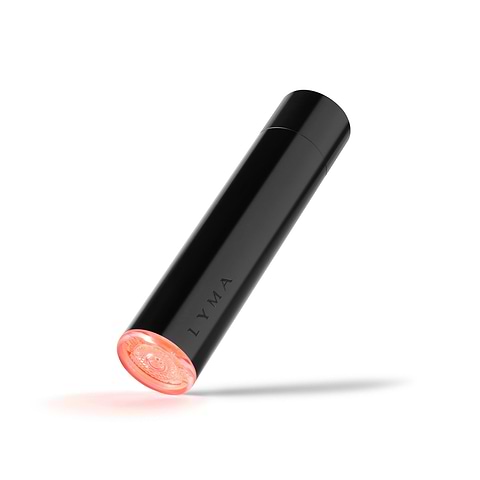
The LYMA Laser is a cold laser device: 808nm near-infrared laser light, engineered to the precise power output that supports visible skin transformation without any heat or downtime. This places it in an entirely different category from red light LED panels or standard LED face masks.
Peer-reviewed research published in the Aesthetic Surgery Journal demonstrates that LYMA's laser technology expressed 45 longevity genes in the dermis; LED technology expressed just one under the same conditions.
LLLT Face Mask: What Does Low-Level Laser Therapy Actually Mean?
LLLT stands for Low-Level Laser Therapy - also referred to as photobiomodulation. It describes the application of laser light at a specific, scientifically calibrated power level: powerful enough to reach the deeper layers of the skin and support visible improvement in appearance, but without the thermal damage associated with ablative or fractional clinic lasers.
An LLLT face mask or LLLT device differs from a standard laser mask in that it is specifically engineered not to damage tissue. The LYMA Laser operates on this principle: 500mW of continuous coherent laser light, diffused through a patented double-diffused lens to make it safe for daily home use - including around the delicate eye area.
This is why the laser mask vs LED mask question matters most here: only a true LLLT laser device can deliver the calibrated dose of energy associated with photobiomodulation. LED devices, regardless of wavelength, cannot replicate this effect.
Is a Laser Mask Better Than LED? What the Evidence Shows
When comparing laser light therapy vs led face mask technologies, the peer-reviewed literature is instructive. Five independent academic papers published in the Aesthetic Surgery Journal - one of the world's most respected medical publications - document the effects of LYMA's laser technology on the skin's appearance. These include the first ever study into gene expression in the dermis using low-level laser therapy.
Results from LYMA's clinical trial showed a 103% increase in skin elasticity measured by Cutometer dual MPA 580. Collagen and elastin production in the extracellular matrix was documented in peer-reviewed research.
The independent clinical trial data, 38 global patents and five peer-reviewed papers place the laser face mask vs LED comparison on firmly evidenced ground. No comparable body of published research exists for LED face mask technology at the same level.
Laser Mask for Skin Rejuvenation: What Can You Realistically Expect?
A LLLT (laser) device for skin rejuvenation used consistently can deliver visible improvements in the appearance of:
- Fine lines and the appearance of wrinkles (face - FDA-cleared claim for US)
- The appearance of skin firmness and definition around the jawline
- Skin tone and texture
- The appearance of blemishes
- The look of scars, old and new
- Skin on the neck and décolletage
Results from LYMA Laser users consistently note visible changes within 30 days of daily use. The device is designed to be used for a minimum of three minutes daily on the face, with the LYMA Laser PRO's larger 30cm² treatment lens covering the face and neck in a single three-minute cycle.
LED Light Therapy vs Laser Treatments: The Honest Summary
If you're weighing up led light therapy vs laser treatments - or trying to decide between a laser vs led mask for face - here is what the science supports:
- LED face masks work superficially at the epidermal level and can offer brightening and temporary toning effects
- Laser light therapy devices using true coherent light (LLLT/photobiomodulation) penetrate to deeper dermal layers
- Cold laser vs red light therapy are not interchangeable: cold laser is laser; red light therapy is typically LED
- The led vs laser mask question is not about hype - it is about the physics of how different light sources interact with skin tissue
- For lasting, visible change to the appearance of the skin, the evidence base for laser is substantially stronger
Frequently Asked Questions
Is a laser mask better than LED?
Based on the available peer-reviewed evidence, laser light therapy devices that use coherent, monochromatic and polarised light - such as LLLT (Low-Level Laser Therapy) devices - penetrate to deeper layers of the skin than LED face masks. LED light is reflected by approximately 95% of the skin's surface, limiting its depth of reach. For visible improvement in the appearance of skin over time, the scientific evidence favours laser technology.
What is the difference between a laser mask and an LED mask?
A laser mask uses true laser light: coherent, monochromatic and polarised. It travels in a focused beam with minimal scatter, reaching deeper layers of the skin. An LED mask uses scattered, incoherent light that disperses when it meets the skin's surface. The key distinction is penetration depth and the biological interaction that follows.
What does a laser mask do?
A laser light therapy mask - specifically an LLLT or cold laser device - delivers calibrated near-infrared laser energy to the deeper layers of the skin. This is associated with visible improvements in the appearance of skin smoothness, firmness and tone over time. The LYMA Laser uses 808nm near-infrared laser light protected by 38 global patents and supported by five peer-reviewed papers.
Is laser or LED mask better for the face?
For the face specifically, laser masks using LLLT technology offer a more evidenced approach to improving the visible appearance of skin compared to LED masks. The LYMA Laser PRO is FDA-cleared for the appearance of face wrinkles in the US, and its clinical evidence base spans five papers published in the Aesthetic Surgery Journal.
Are laser masks scientifically proven?
LYMA's laser technology is supported by five peer-reviewed papers published in the Aesthetic Surgery Journal, plus an independent clinical trial and 38 global patents. LED face masks have a more limited evidence base at equivalent levels of publication quality.
What is the difference between cold laser therapy vs red light therapy?
Cold laser therapy (LLLT) uses true laser light - coherent, monochromatic, polarised - engineered to avoid thermal damage while still penetrating deeply into the skin. Red light therapy typically refers to LED-based devices emitting visible red wavelengths. These are incoherent, scattered light sources. The two technologies are not equivalent despite sometimes being grouped together in marketing.
Can I use a laser mask at home?
Yes. The LYMA Laser and LYMA Laser PRO are both engineered for daily home use. Unlike clinical ablative or fractional laser treatments, cold laser technology requires no downtime, causes no discomfort and is safe to use independently. A minimum of three minutes daily is recommended.


