

Ben Greenfield learns why the technology in a LYMA Laser PRO puts the device in a different league to LED masks and red light therapy.
Ben and Jessa Greenfield were gifted a LYMA Laser PRO by LYMA. This conversation, originally recorded on the Ben Greenfield Boundless Life podcast, is published with their permission. The LYMA Laser is a beauty device for use on the appearance of skin. It is not a medical device and is not intended to diagnose, prevent or treat any medical condition. Individual results from any beauty device will vary.
Biohacker Ben Greenfield is rigorous about what touches his skin. And the device he now reaches for is a LYMA Laser PRO.
The results produced by the groundbreaking cold laser technology have left him nothing short of impressed.
Ben’s endorsement of the PRO comes just weeks after Dave Asprey, a fellow esteemed biohacker, also revealed it is the device which sits at the core of his skincare routine.
Ben revealed his support for the LYMA Laser PRO when Lucy Goff, founder of LYMA, joined him on his Ben Greenfield Boundless Life podcast.
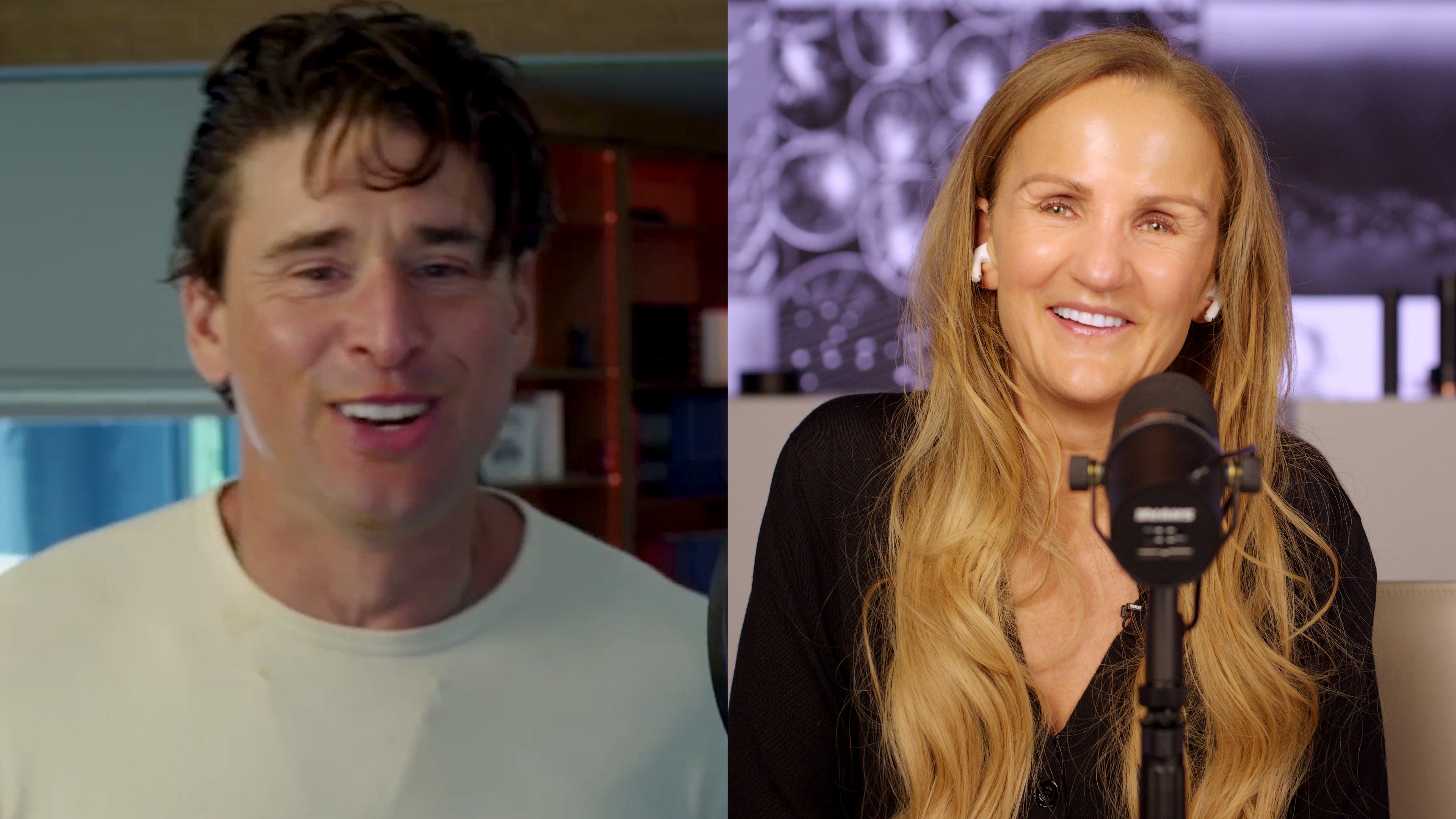
It is a departure for Ben who, up until he got his hands on a LYMA Laser, was known to be an advocate of red light therapy and LED masks.
When asked if he had seen results using the LYMA Laser PRO, he was unequivocal with his response: “yes”. He went on to confess, his wife, Jessa, has also been left impressed with the difference it has made to her skin, so much so that she is “in love with it.”
Ben went on to joke with Lucy that he now has to compete with Jessa to use the device and she normally wins!
Lucy’s conversation with Ben provided the perfect opportunity to elaborate on why LYMA’s laser technology is in a different league to an LED mask. Some may regard both as light for the skin - but they are not the same and do not produce the same visible result.
The two devices are often described in the same breath: light for the skin - but they are not the same and do not produce the same visible result. It is this distinction that Lucy Goff, founder of LYMA, elaborated on when she joined Ben on his Ben Greenfield Boundless Life podcast.
Lucy walked him through what most people miss: the often-misunderstood difference between LED light and laser light; the head-to-head clinical study published last year in the Aesthetic Surgery Journal; and the Swiss-Army versatility of the LYMA Laser, which she uses on her own knees and inner arms as readily as her face.
Lucy founded LYMA with a simple ambition: to raise the standard of what supplements and devices could deliver. She built the company on three guiding principles: science, proof, and innovation. She gathered the experts who could honour them: geneticists, longevity scientists and those working in the biomedical sphere. The brief she gave them is the brief that still sits at the core of the company today. Prove what works. Evidence it properly. Never compromise on standards.
Nearly a decade in, the data from peer-reviewed clinical research is starting to support what she has always known and said. The beauty industry has long pursued visible results through two routes: treatments that work by damaging the skin to encourage a renewal response, and LED light devices that work on the appearance of skin at the surface. The LYMA Laser was engineered to take a different approach altogether: a cold, FDA-cleared laser designed to work with the skin without damage.
LED v the LYMA Laser
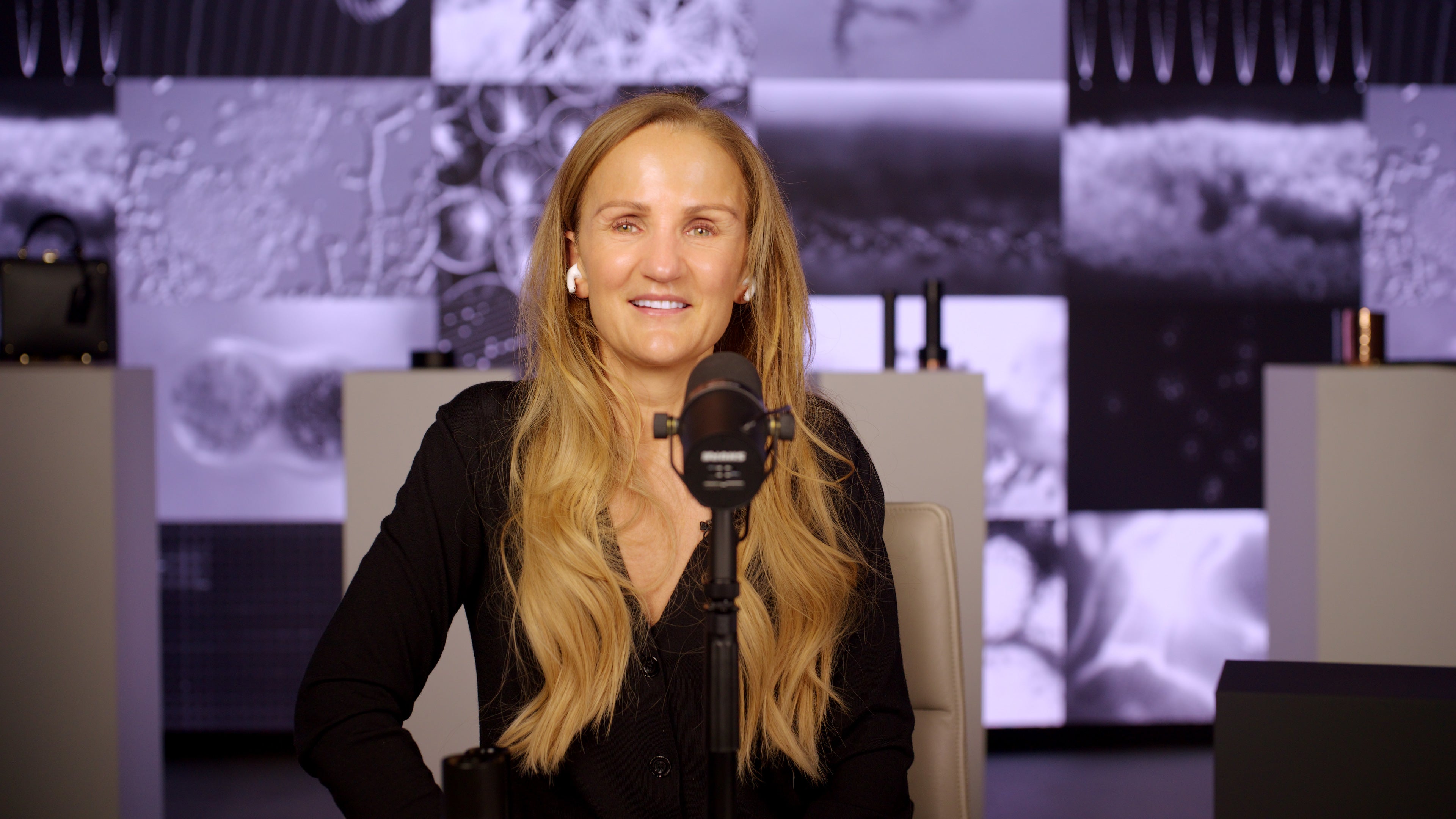
Few categories in modern beauty have grown faster than the LED face mask. They are now ubiquitous: red, blue, green, purple, yellow, sold on every counter and worn in every social feed.
Ben in particular has been an advocate of using LED red light therapy masks as part of his longevity routine. Lucy was only too happy to walk him through why the LYMA Laser is not in the same category as an LED mask.
It's not difficult to understand how 'red light' and 'laser' are often used interchangeably, as though they are the same technology marketed under different names - they are not. The difference comes down to physics: the depth each form of light reaches into the skin is different, and so is what each can do for the appearance of skin once it gets there.
Ben asked: "It's really popular now, Lucy, these masks, right? The red light face masks. And now they've got them in different colours, like purple and blue and green and yellow. Those - from what I understand, and hopefully this isn't a dumb question - I think are LEDs, and I believe they would also have a different wavelength than something like the laser. Can you do a compare and contrast between a mask and a laser?"
Lucy explained the technical distinction:
"So the masks that you see, they're all LED. So red light is LED. Anything that's got the word 'light' at the end is LED. It's not a laser. So you put these masks on and you get this amazing red plume that comes out of them, and they look very dramatic. And the reason you can see that red plume of light is because the light is bouncing off your skin and going back into the room."
"If you want a light source to work beneath the surface of the skin, the light has to have three properties. It's got to be coherent, which means it runs in a straight line. It's got to be polarised, which means it runs in tram lines. And it's got to be monochromatic, which means it's one colour. Those three properties are exclusive to laser light. You don't find them in LED. So LED is great to give you a glow. Those masks are great if you want a glow, or to make you feel better before you go out."
Ben reflects on what Lucy has told him: "Okay. So the light's going to cause more of a colouration, like a glow. Maybe you throw one on before you go out to dinner or something. But you're saying it's not actually changing anything structurally."
Here the conversation moves to evidence - a peer-reviewed paper, published in the Aesthetic Surgery Journal, that examined the difference between laser and LED.
"It is not changing anything structural [LED masks]. And to prove the difference, we ran a clinical study a couple of years ago, published last year in the Aesthetic Surgery Journal. We took a LYMA Laser and applied it to skin and looked at the skin's response. Researchers built an identical device with the same wavelength but using LED as the light source instead of laser."
The published results showed a significantly different response in the skin treated with the LYMA Laser compared with the LED. Two devices, matched on every variable except the light source - same wavelength, 808 nanometres, near-infrared; same power; same delivery. The only difference: laser light on one side, LED on the other. Learn more about the science behind LYMA and what sets the technology apart.
How the LYMA Laser visibly firms skin without damage

Not all collagen is created equal.
The beauty industry has long rested on the principle that to renew the appearance of skin, you first have to damage it. The LYMA Laser was engineered to do the opposite - a cold laser designed to work with the skin without damage.
The logic borrows, loosely, from how the body responds to other kinds of stress: a torn muscle that rebuilds bigger, a heart that strengthens under aerobic load - and prompts Ben to reach for the analogy most people do: exercise.
"Yeah. I think if you look at something like cardiac remodelling from aerobic stress of exercise, or something like muscle remodelling or hypertrophy, or even mitochondrial biogenesis, or like satellite cell proliferation from the damage you might get from slight tearing of a muscle during exercise. I think you could make a case that small amounts of damage might induce a hormetic response that allows an organ to regenerate. I know a lot of people do way too much derma rolling and micro-needling and just tearing things up over and over."
Lucy explains:
"I think whatever your body can create inside your body - through exercise, through your strength, through your resilience - that kind of damage you were speaking about is actually a beneficial damage. That's your body pushing itself to become healthier. But there are so many cosmetic treatments today that just work off this cyclical principle: the more damage we create, the better the skin's going to be."
Her observation prompts Ben to add: "It's like the beauty equivalent of overtraining in exercise."
"When you damage skin to encourage a collagen response, the collagen produced is closer in character to scar tissue than to the collagen found in youthful-looking skin."
Lucy also references a conversation with plastic surgeon Dr Jason Diamond:
"I remember speaking to Jason Diamond, and he was saying when he does a deep plane facelift, the first place he opens up is the neck. He can see the state of the skin in patients who have used these damaging treatments. It's harder to do a good operation if you're not working with the best internal structure."
"The LYMA Laser was engineered to work with the skin without causing damage. For areas like the jowls and the neck, that matters. The skin's appearance is shaped by what sits beneath it. As you age, if that structure changes, the appearance of the skin changes too."
Why the LYMA Laser is a 'Swiss Army knife' for the appearance of skin

The LYMA Laser and its bigger sister the LYMA Laser PRO were created to be versatile from the start - engineered to work across the face and the body, across a wide range of beauty concerns, and across every age and complexion.
For those who invest in them, they become the trusted beauty device they reach for first to address a host of skin and appearance concerns. Lucy explained their impressive breadth to Ben and why she refers to them as 'Swiss Army knives' for skin:
"The LYMA Laser is really good for the look of pigmentation, the appearance of skin texture, or around your eyes - the LYMA Laser is for that. If you want to cover larger areas of your face and body quicker, then the PRO is where it's at. But once you've got one, it's kind of like the Swiss Army knife of beauty devices - it's something everybody should have in their home."
Lucy added it was particularly good at addressing the appearance of redness in the skin, and that the device is calming and lovely to use for the whole family.
And the Swiss Army knife logic plays out across the body too. Ben pressed Lucy on how far beyond the face she takes hers, and she was happy to be candid:
"The knees, the inner arm. I mean, I'm 53. My inner arms were not what they were - areas that just go thin and crepey-looking as you age. It's incredible. It gives you the confidence to wear whatever you want to."
Ben Greenfield & his wife Jessa love the LYMA Laser PRO
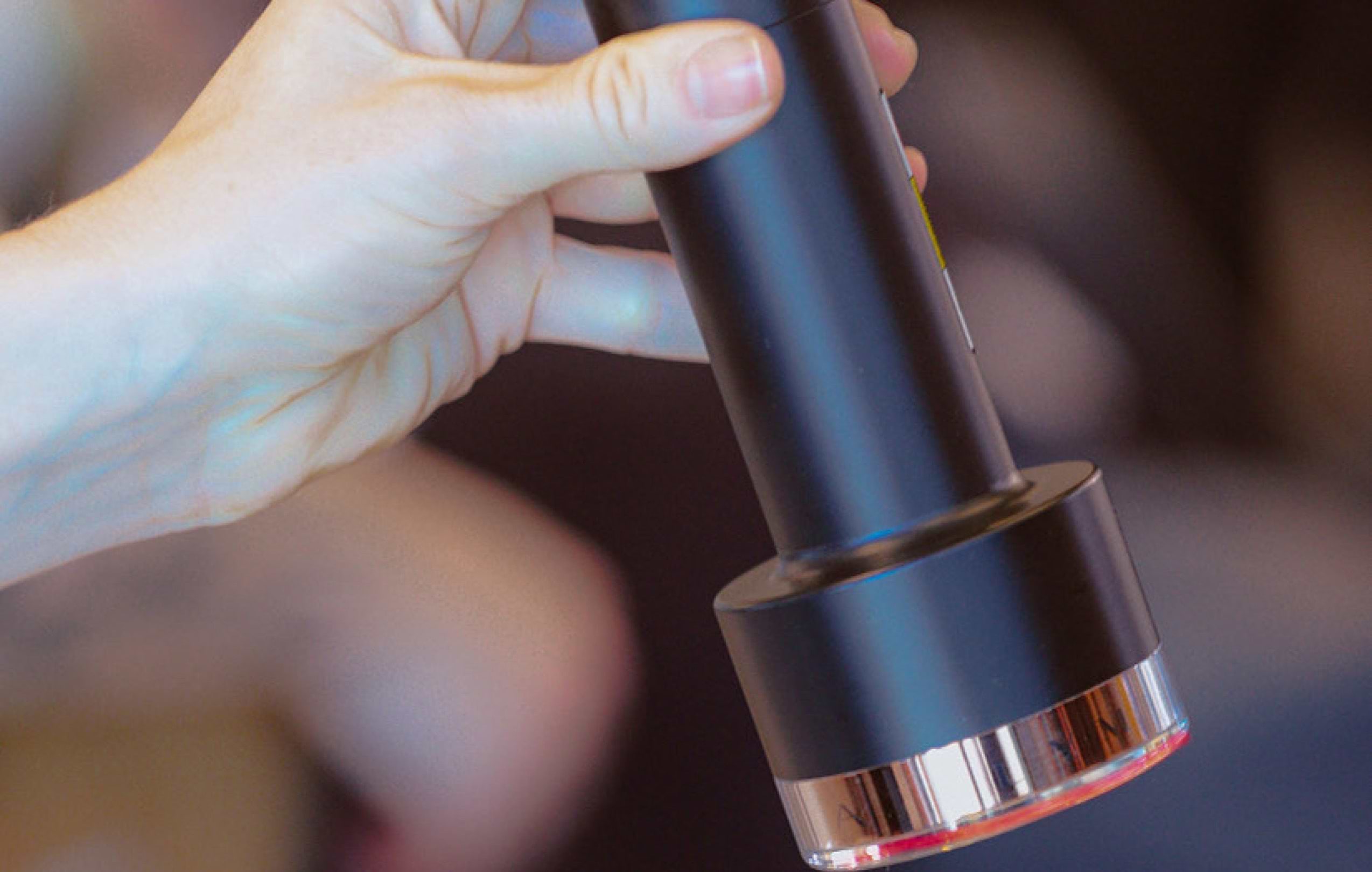
Daily, consistent use is how the LYMA Laser PRO delivers its visible results. Visible improvements build week by week, and the longer the routine, the more cumulative the effect.
When asked by Lucy if he had seen results from using the LYMA Laser PRO, he tells her “yes” but he is now having to compete with his wife, Jessa, to use it!
She has been hogging it since the day it arrived. "Yeah. The cumulative effect is also a problem in my house, because I gave my wife [Jessa] the user manual - like I was telling you before we started recording - and she's using it exactly as prescribed. Which means every morning when I wake up, it's really hard to find, because she's usually on the downstairs couch. She gets up in the morning, she prays, she reads the Bible, she makes coffee, and she's just permanently got one hand up to her face the whole time with the laser. So since we got it - you guys sent one to us like two months ago - since we got it, she's been using it at least three times more than I have, very consistently. She just - she's in love with it. So if anything, you've made my wife very happy."
Lucy is thrilled: "Well, thank you. You should thank me then. A happy wife is everything - happy wife, happy life! Obviously she's beautiful, she might not need any improvement."
"We haven't done super-intense before-after photo tracking, but she usually gives up on something pretty quickly if it's not working for her. And she has been just like every day, like clockwork, grabbing this thing."


