

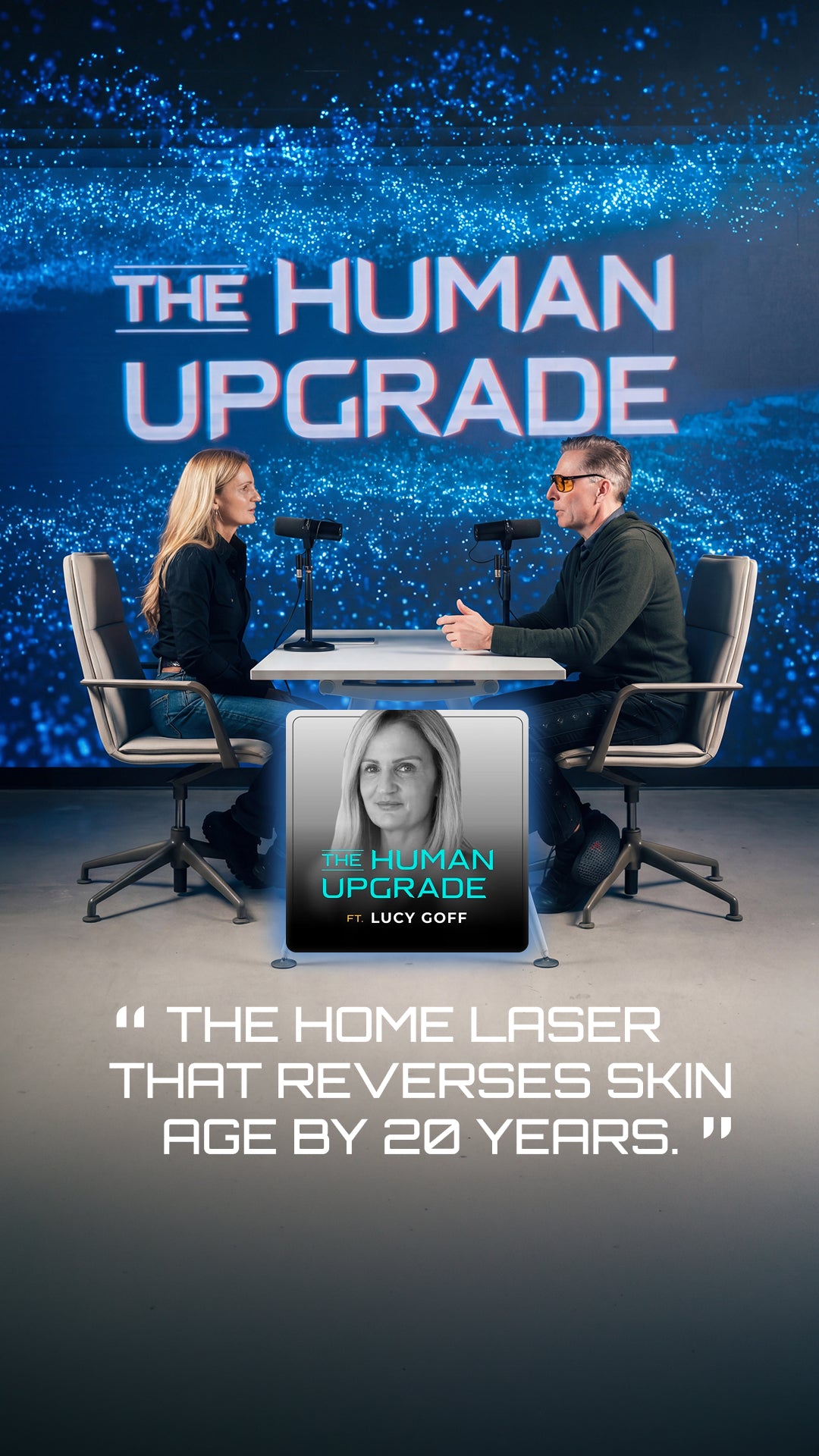
LYMA Laser on The Human Upgrade - when the world's most rigorous biohacker meets real science.
“When someone with that level of intellectual rigour sits across from you and says this is real - it lands differently.”
Dave Asprey has spent two decades sitting across from the world’s leading longevity scientists, biohackers, and medical pioneers. He has interrogated Nobel laureates, geneticists, and performance researchers on The Human Upgrade - one of the most influential health podcasts in the world. He knows what real science looks like. And he knows how to spot the difference between a breakthrough and a marketing claim.
Which is why it matters that LYMA Laser is the technology he chose to platform. In his latest episode, Dave goes deep on photobiomodulation - and on why LYMA stands apart from everything else in the field. Not as an aesthetic device. Not as a wellness trend. But as a precision instrument backed by published, peer-reviewed science that most of the industry cannot get near.
Watch the full episode:
Together they unpacked everything the myths get wrong about photobiomodulation. That it’s superficial. That lasers are for vanity. That the science is soft. Dave has heard those arguments from every direction - and he’s also spent long enough in the data to know when something genuinely changes the conversation.
The science tells a different story. Cellular regeneration. Mitochondrial function. Gene activation at a level that doesn’t just slow ageing - it redefines what ageing even means. LYMA’s published research in the Aesthetic Surgery Journal documents what happens at a molecular level when coherent, polarised 808nm light meets human dermis: 45 longevity genes activated, including a sixfold increase in SIRT1 - a pathway central to how cells repair, replicate, and survive.
Listen to the podcast
The Human Upgrade with Dave Asprey - Listen to the podcast
Execution Is Everything
What Dave recognised immediately is what has always driven the obsession behind LYMA Laser: execution is everything. The science of photobiomodulation has existed for decades. What hasn’t existed is a device precise enough, powerful enough, and coherent enough in its delivery to actually honour that science.
Most devices in the ‘red light’ category are, in Dave’s words, glorified LEDs. They can be fine for the surface - but they do not deliver the kind of coherent, polarised, monochromatic light that cells actually respond to in deep tissue. That distinction is not marketing. It is physics. And it matters because your mitochondria run the whole show. When they get a clean signal and more usable energy, the body suddenly has the budget for repair, collagen synthesis, circulation, and recovery.
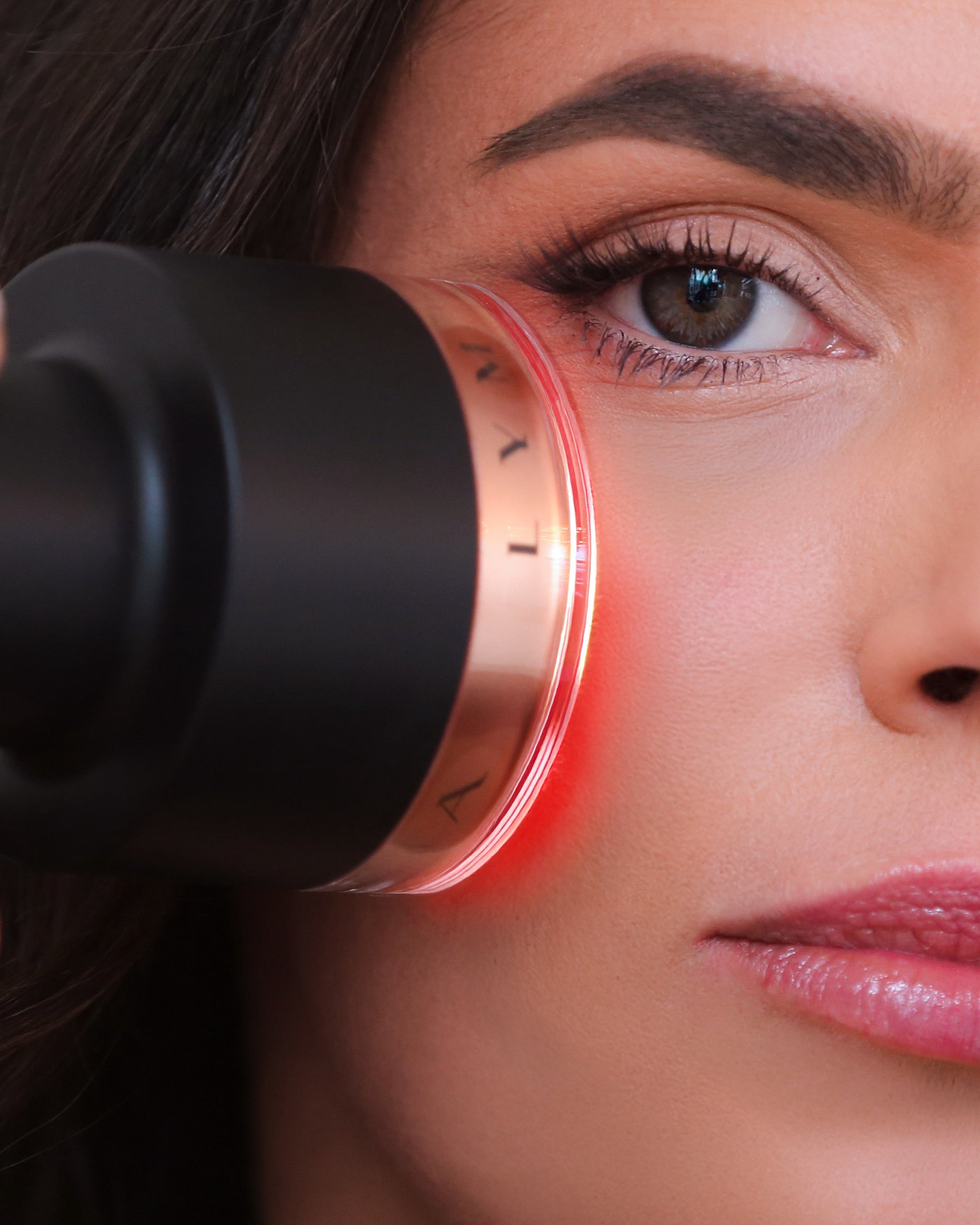
That is the real mechanism behind anti-ageing that does not rely on controlled injury. No damage. No downtime. No inflammation manufactured in the hope of triggering a healing response. Just signal - precise, coherent, and deeply penetrating.
The Personal Is the Scientific
Dave also brought something we rarely hear articulated with such clarity: that the future of biohacking is not pharmaceutical. Not passive. It is profoundly, beautifully personal. The tools that will define the next chapter of human health are the ones that put biological intelligence back in the hands of the individual.
Your skin is not just a cosmetic surface. It is a living organ that responds to signals. The right light signal can flip your biology into repair mode. It’s not a metaphor. It’s cellular reality - and coming from someone who has interrogated that reality with the world’s foremost scientific minds, it lands with the full weight of that credibility.
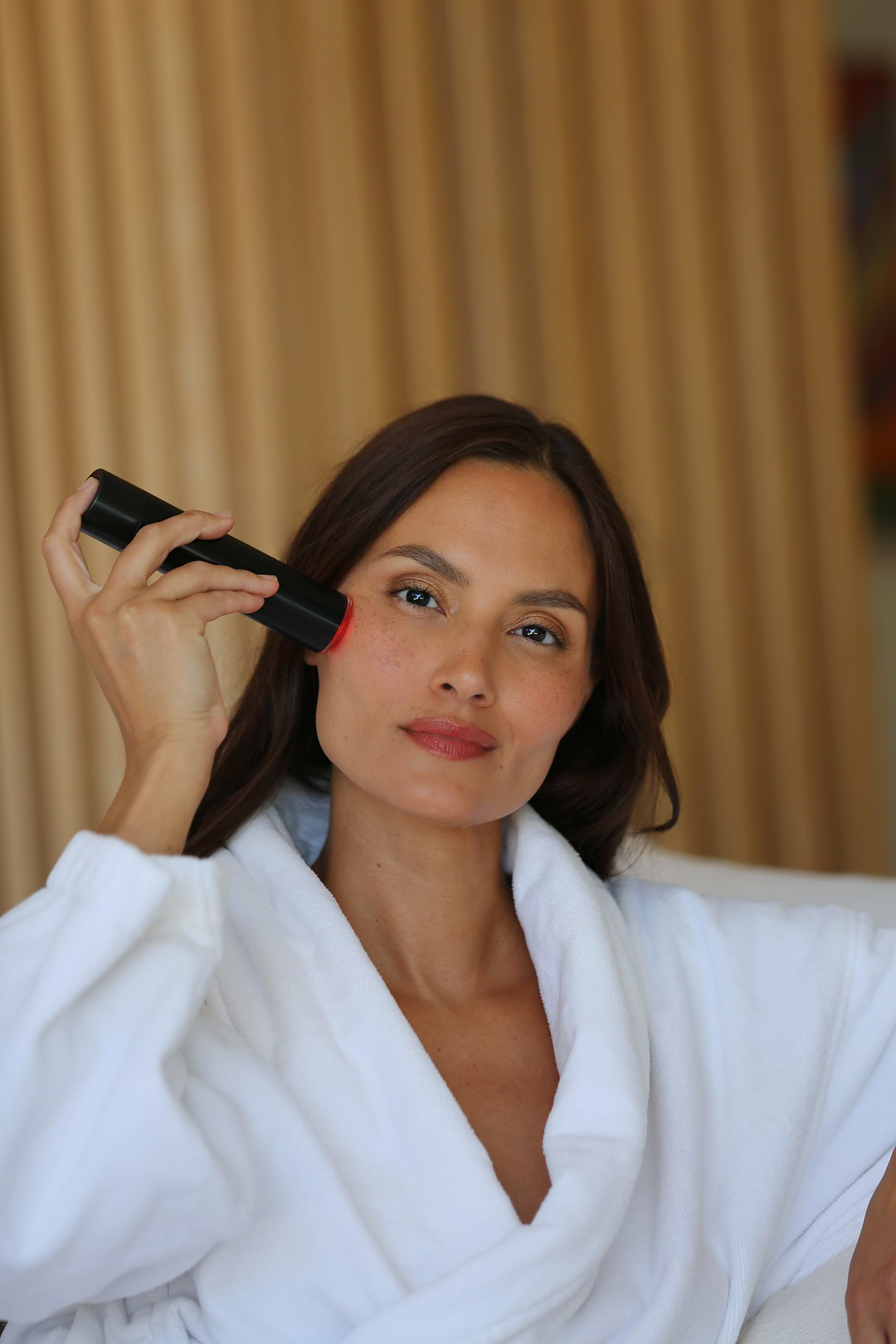
When someone with that depth of knowledge, that network of expertise, and that level of intellectual rigour says this is real - it means something. It means the obsession was right. The decade of development was worth it. And the future of human health is exactly what LYMA always believed it would be: not pharmaceutical, not passive, but profoundly, beautifully personal.
Podcast Transcript*
A professor on our team, Professor Paul Clayton, was in Germany about 7 years ago. He was looking at the photograph of the skin on a knee that had been treated and it looked about 20 years younger than the skin on the other knee. That is when he realised that most of the beauty space – the cosmetic space especially at home – is just centred around LED.
This specific technology is so interesting because it does not damage in order to improve the skin.
When the professor who first discovered this technology came to me, he said: "I think I have found the most important beauty launch in a generation."
You are listening to the Human Upgrade with Dave Asprey. This episode is recorded in London at the headquarters of LYMA Lasers. We are going to talk about lasers – not the kind that cut through cars or shoot down drones, not the kind they use for surgery, not the kind used to damage skin to reduce wrinkles or resurface it. Something else entirely.
Joining us is Lucy Goff, founder of LYMA Lasers. The device uses 808nm wavelength – very well studied, chosen because it has the most evidence behind it.
LUCY: What made you want to go into this space? I guess it was only an accident that the LYMA laser was discovered. Professor Paul Clayton was in Germany about 7 years ago. There was a whole team of doctors in the room. He was at the other end of the room looking at the photograph of the skin on a knee that had been treated and it looked about 20 years younger than the skin on the other knee.
That is when he realised that most of the beauty space – especially at home – is just centred around LED. LED is great for a bulb in the ceiling, but if you want it to have a biological penetration, it is not a laser. It is not as powerful as a cold laser. Cold laser has been used since the 1960s but in hospitals and clinics, because you cannot take powerful lasers into the home – it is potentially dangerous. It can blind you, it can burn you.
He had this idea: if we could re-engineer this huge floor-standing hospital machine into a little portable device at the same power with the same size treatment lens, that would change the beauty industry. The cosmetic lasers available to consumers – non-fracture lasers, fracture lasers, LED – are all working very differently to this specific technology.
This specific technology is so interesting because it does not damage in order to improve the skin. When you damage skin to stimulate it, the body prioritises the speed of healing over the quality of the result. This technology works within the skin completely naturally, improving the appearance of skin without relying on any damage.
The red light you see is just a red light to tell you it is switched on. It has retina-protected technology inside it – you do not have to wear goggles. You can take it with you. It is a technology that has never existed in the cosmetic space at home until now.
DAVE: Most people, when they hear laser, think it is going to hurt, because a lot of what aestheticians do is damaging the skin with a laser. Then it grows back – evenly distributed, it will have fewer wrinkles – but that does not mean you want to do it over and over and over.
LUCY: What you are doing with this honeycomb lens: the light that comes out is still coherent – in a straight line – polarised, meaning it is in tram lines, and monochromatic. For a light source to have a biological effect in the skin, it has to be coherent, monochromatic, and polarised. LED is always mixed with white. It is not coherent. Even if it is a narrow bandwidth LED, it is never truly coherent and never truly polarised.
The lenses inside are not altering the light structure. They are just dispersing it in its original form. I am not a laser scientist – I have to be honest about that. The team that worked on this is truly incredible: a mix of geneticists, laser professors, longevity scientists, and surgeons. They are the culmination of this device.
As each of the beams hits your skin, it has a perfectly rippled effect where they all amplify each other and gain greater power. Whereas with LED, they crash against each other and cancel each other out. That is why in deeper skin layers this works so powerfully – it is creating more energy within the skin, in the dermis in particular.
This device has a biological penetration of 9cm – approximately 3.5 inches. In 3 minutes you get a dose of 12 joules of light. You need to make sure you use it for the correct dose of laser light going into your skin.
The main demographic of people that buy LYMA are people who have reached the time in their life where you can see the ageing process visibly on their skin. I think we have seen the rise of a self-powered, self-directed consumer using technologies that have been cleared as being safe, and being more experimental with them.
Near infrared – those heat lamps at a fast food restaurant are technically near infrared. But they are not in-phase, not coherent, not laser. They warm the skin surface and do not penetrate. The LYMA laser is sensationless. Some people wonder: "Is it working? I cannot feel it." My advice is always: take a good before shot. Use it every day. Four weeks later, take another shot of the same area – and you will be amazed.
We had a journalist who used it on just half their face. He came on camera four weeks later and said, "I look like I have had a stroke," because half his face looked as it used to and the other half was younger. The improvement in skin appearance was remarkable.
When I first used the technology, the skin on my knees looked about 90 years old. I thought: let me try it on my knees. If it works there it will do anything. I started using the laser every day – 15 minutes on each knee. After 4 weeks I thought it was not doing anything, because I could not feel it. I carried on, and 12 weeks later I took another picture. I was completely shocked. This is how the brain can trick you when you are not feeling anything. The skin on my knees had visibly transformed. These results were published in Aesthetic Surgery Journal.
What is the most profound change – the improvement in skin appearance. The skin had visibly tightened and improved. What about extra skin from weight loss? We have many women after pregnancy, or people after significant weight changes, where skin sagging in appearance is a concern. The LYMA laser can help with that – particularly around the jowls and neck, the results in appearance are really visible.
DAVE: Let us talk about ageing spots. LUCY: The LYMA laser is great for pigmentation. If it is from the sun (which most sunspots are), it is brilliant. It disperses the pigment in the dermis so you just cannot see it anymore. And the LYMA laser is brilliant to use before you go into the sun – if you use it before sun exposure, you are less likely to develop pigmentation. So it helps prevent pigmentation forming.
DAVE: I am interested in reducing the appearance of scarring. I did a procedure to remove extra skin. I have some scarring behind my ears. But I would say try the LYMA laser first because you might not even need to do something more drastic. What can I do with the appearance of scarring using the LYMA laser?
LUCY: The LYMA laser works on improving the appearance of old scars and new scars. If you have got an old scar, it will really help smooth out its appearance. Even on a keloid scar – we have done tests on keloid and hypertrophic scars and it takes longer. For a normal scar: 3 minutes, twice daily. You should see improvement in the appearance in about 3 or 4 months. For hypertrophic or keloid scars, longer.
DAVE: What about a C-section scar? So many of my women friends say they just want help with that appearance. LUCY: I have had two. I actually used the LYMA laser on half of my second scar and not the other. The difference in the appearance of the scar was remarkable. LYMA is brilliant for improving the appearance of C-section scars and hysterectomy scars as well.
Light is a nutrient. Different wavelengths have different benefits. The benefits of near infrared wavelength – if you can get the light into the skin – are real. Half the problem is getting the light in with sufficient power. If you can get the light there with something like the LYMA laser, it really is a science of youth.
Before we had lasers, there was a form of light therapy. If you look at the Crown jewels, the jewels are mounted so the back is open – the jewel takes light, filters it, makes it coherent and puts it right into one of the most powerful points on the body. Old jewellery was cut so the gems focused light onto the skin. This was all we could do for light therapy back then. Now with lasers, you can do LYMA – so much more powerful.
You could not buy a laser diode like this 10 years ago for any amount of money. The laser is only as good for the skin as the diffused lens that it goes through. This lens is the cleverest on the market. Other devices use individual diodes – 300, 500, however many. Each one penetrates less than a hair width. This technology spreads evenly throughout the entire treatment lens, meaning you can treat larger areas of skin at a very deep intensity for the first time.
We did a world-first clinical study looking at gene expression in the dermis using the LYMA laser, and then Imperial College London built an identical device using LED as a light source, and we compared the two. The study has been published in a surgical journal. In the LYMA laser-treated skin, 45 genes were expressed. In the LED-treated skin, only 1 gene was activated. We wanted to put proper, credible science behind this technology.
DAVE: If you are interested in a high-powered, high quality, unique laser for all the skin benefits we have just talked about – I am a true believer in this. It is travel size and portable, which I appreciate greatly.
Thank you so much for just creating all this and for being on the show. Your skin results are still blowing me away. LUCY: Thank you so much for having me, Dave, and welcome to London. DAVE: See you next time on the Human Upgrade podcast.
*This transcript has been edited for UK/EU regulatory compliance.


