


What Wellmune is, how it works, what the research looked at, the dose, and whether it's safe.
The short answer: Wellmune® is a purified beta glucan from the cell walls of baker's yeast. Rather than "boosting" the immune system, researchers describe it as priming the immune cells that act first, such as neutrophils. It's been studied at 250mg a day, mainly in people under physical or everyday stress, and is well tolerated. It's not the same as the beta glucan in oats, which is studied for cholesterol instead.
At a glance: Wellmune® is a 1,3/1,6 yeast beta glucan, studied at 250mg a day. It's purified, gluten-free and designed to be taken daily.
Jump to: What is Wellmune? · How it works · The research · Dose · Safety · FAQs
What is Wellmune®?
Wellmune® is a patented beta glucan ingredient purified from the cell walls of baker's yeast (Saccharomyces cerevisiae). Its glucose chains are linked in a 1,3/1,6 pattern, the structure that immune cells recognise. The purification process removes the rest of the yeast, so the finished ingredient is gluten-free.
Is Wellmune® the same as oat beta glucan?
No. Oat and barley beta glucans have a different 1,3/1,4 structure that forms a gel in the gut and is studied for cholesterol. Yeast beta glucans like Wellmune® are studied for the immune system instead. For the full picture, see our guide to beta glucan foods.
How does Wellmune® work?
After you swallow it, Wellmune® is taken up by immune cells in the lining of your small intestine and carried to the lymph nodes, spleen and bone marrow, where it's broken into smaller fragments. Researchers describe these fragments binding to receptors on neutrophils, the most numerous white blood cells and part of the innate, first-response immune system.
You don’t want a boosted immune system. You want a ready one.
An overactive immune system isn't a good thing: it's what drives allergies and autoimmune conditions. That's why "boosting" is the wrong goal. You don't want a boosted immune system. You want a ready one.
What has research on Wellmune® looked at?
Wellmune® has been studied in several published human trials, mostly in healthy people under physical or everyday stress, when the immune system is under more pressure than usual.
During physical stress
Studies in marathon runners and in adults after intense exercise measured upper respiratory symptoms and salivary IgA, an antibody that's part of the first line of defence in the mouth and throat, comparing yeast beta glucan with a placebo.
Energy and mood
The marathon study also measured mood and vigour after the race.

How much Wellmune® should you take?
Most studies have used 250mg a day, with some using 500mg. It's designed for daily use rather than only when you feel run down, because priming the immune system takes time: trials typically ran for four weeks or more.
When should you take Wellmune®?
Any time of day, with or without food. Taking it with breakfast alongside other supplements makes it easy to remember.
Is Wellmune® safe? Side effects to know
Wellmune® was well tolerated in clinical trials, with side effects similar to placebo. As with any supplement that interacts with the immune system, check with your GP first if you take medicines that suppress the immune system, have an autoimmune condition, have a yeast allergy, or are pregnant or breastfeeding.
 Other ways to support your immune system
No single supplement replaces the basics. Sleep matters most: short sleep weakens immune responses. Regular moderate exercise, managing stress and a varied diet all play a part. Get vitamin C from peppers, kiwi, berries, citrus and broccoli; zinc from shellfish, meat, seeds and beans; and vitamin D from oily fish and eggs, though most people need a supplement in winter. Read more about how the immune system works and vitamins D3 and K2.
Wellmune® in the LYMA Supplement
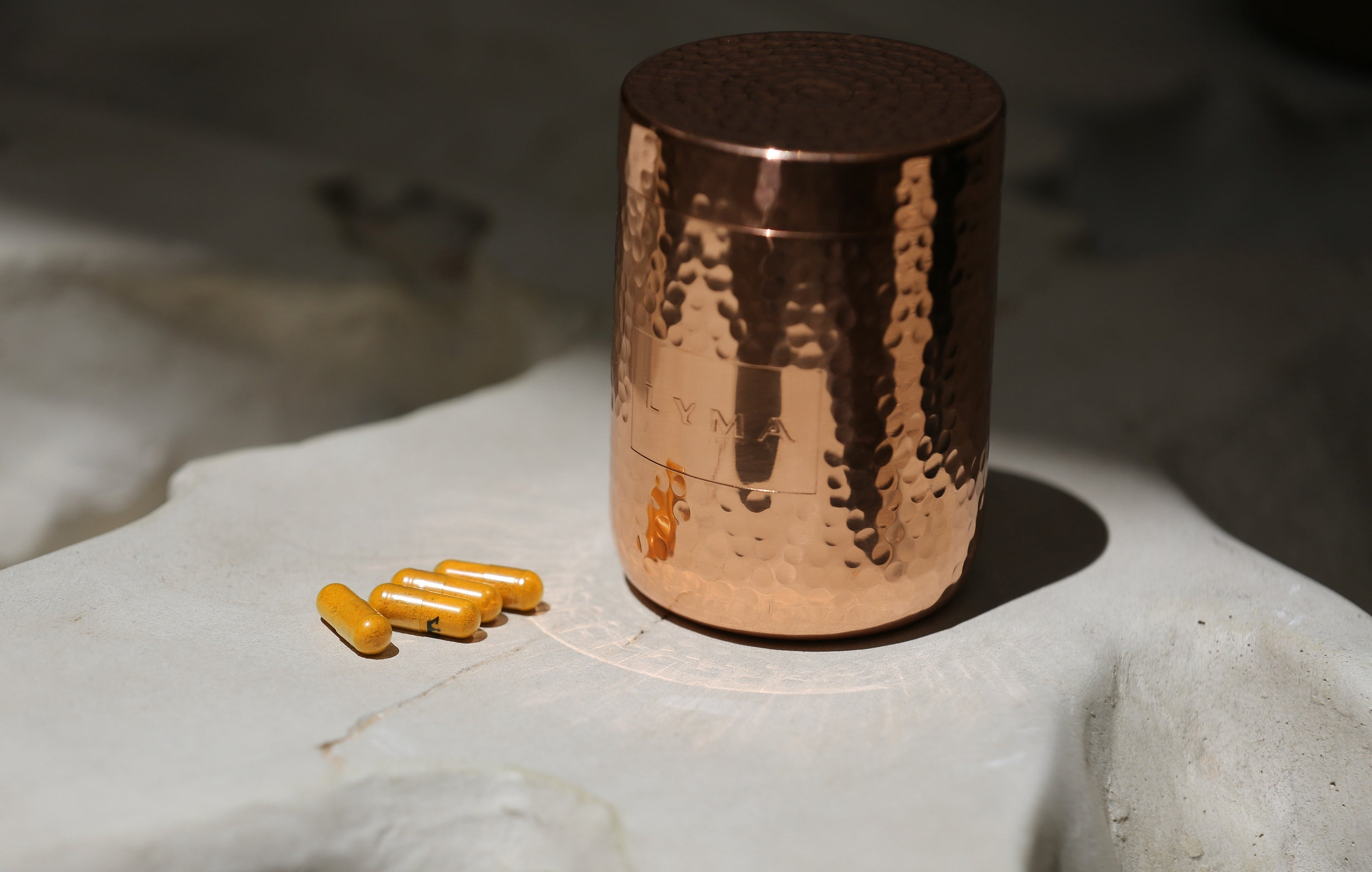
The LYMA Supplement contains 250mg of Wellmune®, the dose used in its clinical research, alongside 2,000 IU of Vita-algae D3™, a plant-based vitamin D3. Vitamin D contributes to the normal function of the immune system. The daily dose is four capsules with breakfast, alongside nine other patented ingredients.
Sleep is the foundation of everything else; see our guide to how much sleep you really need.
Wellmune®: your questions answered
Does Wellmune® contain gluten?
No. Although it comes from baker's yeast, it's purified, and the finished ingredient is gluten-free.
Is Wellmune® the same as brewer’s yeast?
No. Brewer's and nutritional yeast contain some beta glucan, but Wellmune® is a concentrated, purified form made to a consistent specification.
Can you take Wellmune® every day?
Yes. It's designed for daily use, and that's how it was taken in clinical studies.
What is the best immune system booster?
There isn't one. Sleep, exercise, stress management and a nutrient-rich diet come first. Among nutrients, vitamin D, vitamin C and zinc contribute to the normal function of the immune system.
The bottom line
Wellmune® is a well-researched yeast beta glucan, studied daily at 250mg in people under stress. Good sleep, a varied diet and enough vitamin D remain the foundations of a healthy immune system.
Good sleep, a calm morning and your daily capsules: small habits, kept consistently.
Always consult your medical professional if you have a medical condition, or existing health protocol, before beginning any new supplementation regime.
References
Talbott S, Talbott J. Effect of beta 1,3/1,6 glucan on upper respiratory tract infection symptoms and mood state in marathon athletes. J Sports Sci Med. 2009;8(4):509–515.
McFarlin BK et al. Baker's yeast beta glucan supplementation increases salivary IgA and decreases cold/flu symptomatic days after intense exercise. J Diet Suppl. 2013;10(3):171–183.
Fuller R et al. Influence of yeast-derived 1,3/1,6 glucopolysaccharide on circulating cytokines and chemokines with respect to upper respiratory tract infections. Nutrition. 2012;28(6):665–669.
Goodridge HS, Wolf AJ, Underhill DM. β-glucan recognition by the innate immune system. Immunol Rev. 2009;230(1):38–50.


